· Playbook · 5 min read
B2B podcast examples: shows that drive revenue
Most B2B podcast examples are audience plays. Here are the design choices that make a show drive pipeline, with a real show and real episodes as the worked example.
Search for B2B podcast examples and you will mostly find famous shows with large audiences, recognizable brands, and years of production behind them. They are usually poor templates for a founder who wants a show to create relationships and pipeline.
The useful examples are the ones designed around the commercial result a founder actually needs. Here is what that design looks like.
What makes a B2B podcast example worth copying?
A B2B podcast is worth copying when its guest selection, follow up, and content system are built to create business relationships, not just downloads. Those choices tell you far more about the value of the show than its chart position or audience size.
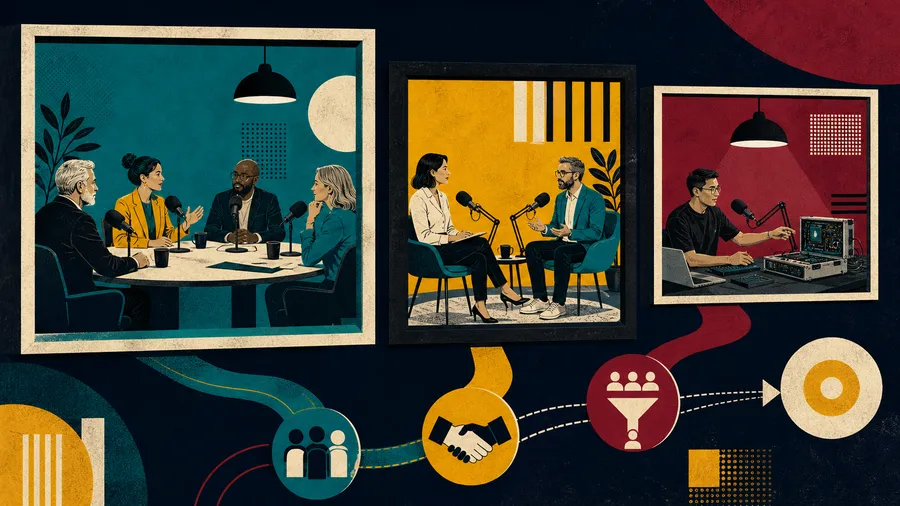
Start with the guest list. A GTM-first show invites people the host genuinely wants to know: potential clients, referral partners, category experts, and other valuable relationships. The invitation gives both people a useful reason to spend thirty to forty five minutes together without forcing a sales pitch into the room.
Then look at what happens after the recording. Is there a thoughtful follow up? Does the relationship continue? Does the conversation lead naturally to another useful introduction, a collaboration, or a commercial discussion? The episode opens the door. The work after it determines whether that door stays open.
Finally, look at the content around the episode. One strong conversation should become clips, posts, a newsletter, and a search-friendly article. The recording is the source material for a month of useful content, not the finished product.
This is why most famous B2B shows are the wrong model for a founder. Many are media plays supported by dedicated production, editorial, and distribution teams. They are designed to build an audience at scale. A founder needs a simpler show designed to build the right relationships.
What does a pipeline-first show look like?
A pipeline-first show looks like The Connector’s Table: each guest is someone the host would want a business relationship with, and the episode is the excuse for the conversation. The public content matters, but the relationship begins before the episode is published.
The first five episodes make the design visible. The guests include Joe Douglass of Clear Eyed Media, a three-time Emmy-nominated investigative journalist who founded a legal video company, and Zack Mukewa of Sloane, the head of capital markets advisory at a communications firm.
The other guests are a prioritization coach, an experiential marketing measurement leader, and an influencer marketing leader at a major agency. These are not five people chosen because they share a broad job title or promise the largest reach. Each brings distinct expertise and the potential for a valuable long-term relationship.
That is the part worth copying. The show creates a reason to reach out, gives the guest a platform to teach, and lets the host build trust through a real conversation. Publishing the episode extends the value of that conversation, but it is not where the value starts.
Which episode formats work in B2B?
For pipeline, a single-guest interview usually works better than a panel or a solo show. It gives one relationship enough time and attention to develop, while giving the guest room to explain something they understand deeply.
Thirty to forty five minutes is enough. The goal is not to fill an hour. It is to get beyond rehearsed talking points and into the decisions, lessons, and stories that reveal how the guest thinks. Good questions should let the guest teach, not make the host sound clever.
That teaching also creates a search asset. A narrow conversation with an expert can answer the exact questions people in that market are already asking. The guest’s niche expertise becomes a useful episode, clips, written insights, and an article that can keep earning attention after the recording ends.
Panels make relationship building shallower because the attention is divided. Solo episodes can show expertise, but they do not create a new buyer or partner relationship. Both formats can have a place later. The single-guest interview is the strongest foundation when pipeline is the job.
How do you measure whether a show drives revenue?
Measure a sales-first show by the relationships and opportunities it creates: guests booked, follow-up conversations, and deals influenced. Those numbers reflect the commercial job the podcast was built to do.
Downloads are a vanity metric for a sales-first show. They can tell you whether distribution is growing, but they cannot tell you whether the right person entered your network, took a second conversation, made an introduction, or moved closer to working with you.
Track who accepted an invitation, who completed a recording, what follow up happened, and whether an opportunity was created or influenced. Not every guest should become a sales conversation, and forcing one will damage the trust the show creates. The point is to see whether the right relationships are accumulating and whether some turn into business over time.
How do you start without an audience?
You start without an audience by treating the first five episodes as relationship building, not broadcasting. You do not need thousands of listeners to make five valuable invitations, have five sharp conversations, and build five new relationships.
Choose a narrow premise that gives the right guests a credible reason to join. Build a list of people you would be glad to know even if the episode produced no public reach. Then invite them around the question your show exists to explore. Our B2B podcast strategy guide walks through how to connect that premise, guest profile, and follow up before you record.
If you want a show designed around relationships and pipeline from the start, book a conversation and we will map the right version for your business.