Episode 1 · June 22, 2026 · 39 min
Joe Douglass on storytelling that wins cases and makes people feel something
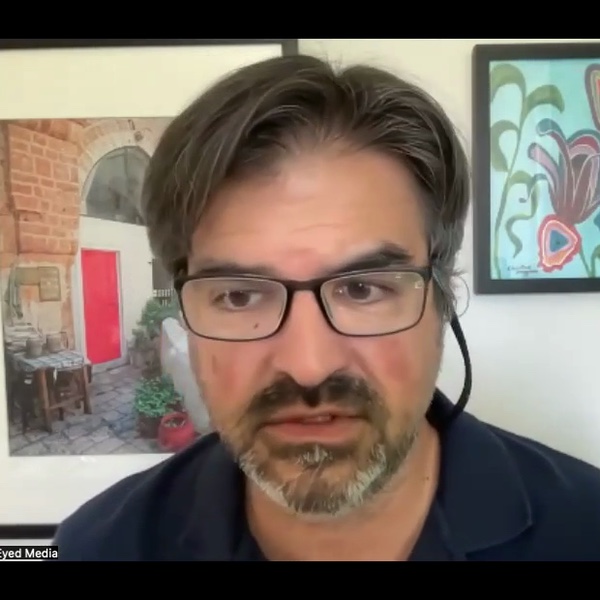
Joe Douglass
Founder, Clear Eyed Media
Joe is a three-time Emmy-nominated investigative journalist and the founder of Clear Eyed Media, where he turns complex case files into settlement documentaries that help plaintiff attorneys win.
Joe Douglass of Clear Eyed Media, a three-time Emmy-nominated journalist, on turning thousands of pages of case files into documentaries that settle cases and move people.
Watch or listen to the full episode
Audio edition
I make a 60-minute style documentary called a settlement documentary to really bring forward the power, the emotional power, the factual power of these cases.
Every video I've made has resulted in a settlement, a substantial settlement for my clients.
It's like drinking from a fire hose, and I'm like, I've got to find a story in all this.
The biggest thing about journalism is just be willing to be wrong.
Takeaways
- 01 Joe spent over 16 years as a TV news producer and reporter in Los Angeles and Portland, and he carries those investigative skills into every video he makes today.
- 02 Clear Eyed Media produces 60-minute settlement documentaries for plaintiff attorneys, built to surface the emotional and factual power of injury and neglect cases before they ever reach trial.
- 03 Day-in-the-life videos must follow strict rules of admissibility because everything in the raw footage could end up in front of a jury, so honesty and protocol matter more than polish.
- 04 Every settlement video Joe has produced has resulted in a substantial settlement for his clients, in part because seeing a victim's real life is far more persuasive than reading it in a case file.
- 05 The hardest editorial decision is often what to leave out, because cutting a tangent can produce a more powerful and undeniable story rather than a weaker one.
- 06 Joe uses a private, secure version of NotebookLM to converse with massive document sets, but his deepest case-winning discoveries still come from digging through the raw files himself.
- 07 The same instinct that drives investigative journalism powers his personal tribute videos, where the goal is to uncover the surprising, moving truths about a person's life and legacy.
Chapters
Times are aligned to the audio edition.
- 00:26 Joe's journey from TV news to founding Clear Eyed Media
- 02:17 The process behind building a settlement documentary
- 03:15 Day-in-the-life videos and rules of admissibility
- 17:55 Lessons from years of investigative journalism
- 18:19 The Portland teacher abuse story that changed a school
- 19:43 Freeing a man falsely imprisoned in Mexico
- 26:27 Finding the through line in 40,000 pages of files
- 27:59 Using NotebookLM and digging deeper than the tools
- 32:00 How long a project takes and the tools he relies on
- 36:28 What is next for Joe and Clear Eyed Media
Transcript
Joe Douglass spent more than 16 years as a TV news producer and three-time Emmy-nominated investigative journalist before founding Clear Eyed Media, where he turns thousands of pages of case files into settlement documentaries that move juries, mediators, and families alike. In this conversation he walks Vishnu through his process, the stories that shaped him, and why the willingness to be wrong is the heart of good storytelling.
Vishnu: Hi, buddy. My name is Vishnu. I’m the host of this podcast, and we have Joe Douglass here. Joe is a three-time Emmy-nominated investigative journalist and the founder of Clear Eyed Media. Hey, Joe, how are you?
Joe: I’m great. Glad to be here.
Vishnu: Awesome. If you want to share a little bit about yourself and your background, we can get started from there.
Joe: So I am a journalist. I used to work full-time as a TV news producer and reporter in Los Angeles, California, and Portland, Oregon, a couple of the places I worked for over 16 years in television. Like you said, I had three Emmy nominations, including an investigative reporting Emmy nomination. I also still do journalism through a blog and a site that I run, and I write for some local newspapers where I live in Massachusetts.
But my main focus and my main career right now is running Clear Eyed Media, which is a video production company. We make legal videos for attorneys, generally plaintiff attorneys in civil litigation. Usually it’s injury cases or neglect cases. I basically make a 60-minute style documentary called a settlement documentary, often in these cases, to really bring forward the power, the emotional power, the factual power of these cases.
My company also makes documentaries for personal folks. I’m working on a documentary right now about a woman who’s retiring, and it’s kind of for her family. I use the power of my skills and video to tell documentary-style stories in a way that helps my clients in a number of different ways, and it’s something I really love.
Vishnu: Fascinating. So media plus investigative journalism, and that led you to producing videos for lawyers and the legal sector, and then also founders or individuals who want to tell a story about themselves and grow their business. Fascinating. Is there a process that you follow to build out videos? How do you actually go about it? What is your process like?
Joe: At the beginning, it’s a lot of questions. When someone comes to me and they’re interested, or they want to find out more about what I do, I’m very open. People can come to me and talk with no pressure. I’m not a big slick sales guy who’s going to try to make you buy something. It’s really about sitting down and going, okay, what are your goals? What do you want to do here? What do you want to have happen at the end of this video? That’s a really important question. It’s a big question, but then you start to understand what they’re trying to do.
In legal cases, it’s like, what is the actual point you’re trying to make? And why do you want to do this? Usually we’re presenting this in mediation, because it’s before litigation. There are also videos I make which are day-in-the-life videos, where you’re shooting someone in the course of their life after an injury and showing how it impacts them. Those are a little more straightforward, and there are a lot of legal requirements you want to meet. That’s important, and we do that because we have to make sure they’re admissible in court. If they’re going to show up in court, they have to be completely true.
You’re basically following the protocols of the judge, or whatever the attorney, my client, stipulated. I make that clear to everybody on the crew. One of the big things about those kinds of videos is that no matter how it ends up being edited, everything that’s in the raw footage is all admissible in court. So I tell everybody, this is all going to be potentially in court. We make them honest and ethical. We’re not showing things falsely. We show people what their real life is like. So if someone got hurt in a car crash or an industrial accident, this is how they get up in the morning, this is how they use a walker, this is the stuff they have to do with their shoes. That’s a big part of that kind of video, and it can be incorporated into a settlement documentary.
It’s a lot of journalistic things, like what happened? What are we trying to prove? What’s the opposition saying? And what’s the legal theory we’re operating under? I’m not an attorney, but I have to communicate a big legal thought or theory by virtue of a story, so it’s important for me to know that. I work hand in hand with them. I also gather a lot. I ask, what do we have in terms of deposition videos, people talking on camera already? A lot of times I gather a lot of stuff and we end up not shooting much, but sometimes we do. It depends. So I try to gather and figure out what we actually have, what visual evidence we have, and then what we need. Do we need to go shoot the site where this incident happened? Do we need to shoot another interview, or more interviews with other people, and what’s going to be within their scope?
Once you get that all documented and laid out, then, it sounds kind of boring, but I make a scope-of-work agreement and a contract. So everything’s written down, very clear. Everybody can see it. All the stakeholders meet maybe a couple of times until that’s actually done and signed off on. Then they sign an agreement, I sign the agreement, everybody pays the money up front, and it’s really important to have all that clear. Then we go through the process of scripting it, logging all the interviews, and making a script. Drafts get approved. There are usually two drafts of the script, and then drafts of the video get approved, usually two drafts of the video, and then we go forth from there.
Usually I’ve had a great experience where every video I’ve made has resulted in a settlement, a substantial settlement for my clients. So that’s the short version of my process. In the personal videos it’s somewhat similar, although you’re obviously not trying to win a legal case. You’re more trying to emotionally connect with the person it’s for. It’s a weird thing to say, but I’m happy if the person who looks at it cries. It’s not necessarily promotional, although I’d be open to doing that too, like you said, for business folks.
I’m making a documentary right now that’s about a grandma and her kids. They wanted to make this substantial video about her because she’s a character, she’s really interesting. She has this legacy of love and accomplishment. It’s about documenting that, but also documenting what she’s like to be in the room with, her personality traits. You take a lot of old pictures and old videos and juxtapose that with what she’s like now, and you end up creating a powerful story. That’s something you will always remember them by, and it really means a lot to people when they get that. There are a lot of tools that can put together slideshows automatically and pump out something on your phone, but this is a lot more intentional than that. It’s more of a real documentary, because I come from that background. We’re getting into who they are, a story that’s hopefully engaging and even funny at times and emotional, a substantial video upwards of 20 minutes long. I’ve done feature-length documentaries as well. It’s really fun. I love doing this because I get to use my journalistic skills every day, and I love putting a big smile on people’s faces or helping them win cases. It’s really fun.
Vishnu: I can see the value in both. I can see the value in the personal videos that you create. I would love to show documentaries about my grandparents to my kids, kind of passing over the legacy of where they came from. My grandfather was an amazing guy. He’s passed, unfortunately, but he built his entire house by himself. He’s a true mechanical engineer. If my kids got a shred of what my grandfather was, it would just change their perspective.
I can also see how this can impact the legal sector. I’m curious how it’s currently handled without the videos. How is it handled in a courtroom, and how does having the video impact the success of the cases? Do you have any case studies or success stories on that?
Joe: Basically, why do they use videos? It’s a good question. If I was to show a video like that to a jury, yes, amazing, that’ll sell quite well with them.
Vishnu: Right. Versus if it was a speech. How is it presented in a courtroom right now, versus how does this work? I’m not fully familiar with legal cases, but I’m curious. Is it standard practice? Do they actually use videos all the time, or is it something unique that you’re providing?
Joe: No. Those are really good questions, and a lot of people probably have those questions. I’m in the United States. I know you’re in Canada. I don’t really know a lot about the Canadian judicial system. I know it’s probably substantially different than ours, but most of these videos are done pre-trial, like the settlement documentaries, because they’re created to hopefully prompt a settlement.
Most of the time, in most cases, they don’t use these kinds of videos. My clients tend to be lawyers who usually have pretty big cases and go after the big fish, and they also have cases which they say present well. It’s not going to come across as powerfully through just documentation, through just reading, or giving some kind of slide deck presentation at a mediation hearing. That just doesn’t quite capture it the way it does when you see the person’s face. The big thing I like to show is before and after, and it’s just real. I don’t try to be manipulative, because it’s about being honest and truthful with the evidence.
I had a case with a guy, a father of two kids, and I have a picture of him holding his children in his arms before this horrible industrial accident on a work site. He was a contractor, and now he’s decrepit and he can barely get up out of bed. His kid has to tie his shoes in the morning, and we have video of that. There’s also the actual documentation from the doctor saying this. So it’s not like we’re staging it. I literally show it and make it part of the story. There’s an X-ray of his back riddled with giant screws, and there are shots from the accident of blood on the ground next to the cherry picker he was up on. That really brings you right into it. Wow, this is the case. This is what you’re getting across to the mediator and to the defendant. It’s like, hey guys, this is what you’re going to face in a trial. Do you want to do it? We were ready to go, but just so you know, here’s what this guy looks like. This is what the visual evidence looks like. This is what the jury’s going to see. This is how this guy presents. This is how the facts play out, because facts are ideas and things you know, but they’re also visual. Seeing the scene, hearing the voices, seeing the impact on this man and his children is not just there for manipulation. It’s facts of the case, because those are the damages that were caused by this horrible incident.
I had another case where a guy was released from a mental hospital over and over again, despite him actually imploring them to keep him in the facility. He kept begging them to keep him. He was like, I’m going to hurt somebody, I’m going to hit somebody in the head, I want to hit a woman in the head, I want to hit children. It was really disturbing. I had body cam video from the police of him telling the police this, and then police reports of him saying it. Then I did my own research, because I’m an investigative reporter, and I found out he had warrants out for his arrest in other states for violent crimes, but this facility kept releasing him back into the public despite all of this evidence. This really helped build the case. We had the woman who was hurt, the body cam video of her right after the incident with this guy who threw a rock at her head, and her testimony in depositions. I ended up just shooting the scene where it happened. We had so much from the deposition video, the case file, the rock itself, all this other stuff, that we made a video that resulted in a really great settlement. That case probably settled for a lot more than it otherwise would have, because reading it in a case file, you can kind of get how dramatic it is, but when you see her, and you see the rock, and you hear this guy imploring people, it really puts the onus on the hospital right away. So it’s about basically making an undeniable case visually and structurally.
Vishnu: I can see how it brings things to life. I would assume the courtroom is quite clinical, where you’re supposed to use the proper words, address people appropriately, and there’s a process the court case goes along. Bringing in a video that is emotionally charged and provides facts, but in a very raw manner, very much adds the flavor of pivoting, throwing the opposition off of their game potentially. I can absolutely see that being a massive asset.
Joe: Once you get to court, the whole thing is different. Or even before that, right? Before you get to court is where you do these settlement documentaries. Once you get to court, they walk into their courtroom presentation, and understandably, and it’s probably a good thing, they have to follow rules of admissibility and everything else. That’s why typically for court, you don’t usually do a settlement documentary, because there are all kinds of rules. It’s not that they think they’re not legitimate or valid, it’s just the rules against hearsay and everything else. It gets really into legalese. You can’t show those things typically to a jury. You’d have to actually have the people testify and show the raw evidence. But we can do a day-in-the-life video, because you can’t do that in a courtroom. Like, okay, here’s where Bob gets up in the morning in his apartment, here’s how he prepares food for himself. We try to keep it G-rated or PG-rated if there were a rating system, but you will show, here’s what he does in the bathroom. I’ll have him wear shorts and a t-shirt, not be nude, but there’s often a chair in the bathroom to use the shower, little rails on the toilet. That’s important for the jury to see, because it’s the impact of this injury on this person.
You also need testimony from family members or close people, because sometimes people have brain injuries and you can really tell the difference. They’re not even always aware of it. It’s like, you know what, before this accident Bob used to kill all of us at trivia and now not so much. Or kids saying, dad used to take us to the pool all the time, and we don’t go anymore because he can’t do it. I try not to be manipulative. I try to present these as just facts. I tie it into, these are damages. This is actually a damaging thing for his family and for him. I touch on it and then move on with the story. I don’t want to harp on it, because if I look like I’m trying to be manipulative, people pick up on that. You want to make sure you’re thorough and you tell the story appropriately and get those points across, but you don’t want to be a dirtbag who’s trying to manipulate everybody. You have to walk that thin line.
Vishnu: I’m sure a lot of your experience comes from the investigative journalism and also the media experience. Let’s touch on that a little bit. Do you have any interesting stories from that era? Let’s talk about investigative journalism, and then we move to the media side.
Joe: I worked in news for a long time. I still write stories all the time. One among my notable stories was in Portland, Oregon. I had a story of a teacher who was abusing kids, documented as such by the state, but he was allowed to keep working as a teacher for years. He got promotions and raises after that. He had actually been disciplined for some of this abuse, but they still let him continue working. It was a case that had a massive amount of impact, because I went to a meeting of the school and the whole community, where they invited all the other media people, and the superintendent came and talked about it. They ended up with multiple administrators leaving after all that. They replaced the principal of a school, and there was about $2.2 million in lawsuits over stuff that I had divulged to the public. So it was really something else to see. Wow, okay, these people are here because I told them about all this. It’s very gratifying, but it’s also really disturbing what I uncovered, so there are mixed feelings about it. I don’t want to rejoice in this horrible predicament, but I’m also proud of myself that I was able to do that.
I had another case where I got a guy basically taken out of prison in Mexico. He was falsely imprisoned under false pretenses and accused of all kinds of horrible things. Essentially, what it looked like was that people were trying to juice him for money, but the government was heavily involved. There was a prosecutor who was accusing him of all kinds of false things. By virtue of my reporting, I ended up getting senators involved and government officials in the United States, and we ended up getting this guy out. He had been doing business for years in Mexico as a food importer, growing food. Some of the wrong people got wind of him and figured they could try to scheme him for money, and they used this to try to juice him as much as possible. I did a bunch of stories about that from Oregon, where I talked to his brother and other people. I even talked to him. He was able to call me from the prison a couple of times, because they’d let him make phone calls, and I did calls with him. Then I got his interview when he got back, and I was the first one again.
I recently did stories about a police officer who ended up getting fired after stories I did, because he was allegedly having inappropriate relationships with a domestic violence victim he was supposed to be protecting. There were also some questions about his relationship with the Proud Boys, and questions that were never answered about his communications with a Proud Boys member who was a very overt racist and violent person that he was never charged with investigating. He just had multiple text messages and messages between them. Anyway, it’s something I have a passion for and I love to do. I will always be a journalist. I don’t necessarily want to do it a hundred percent full-time for a living, because I feel like it’s too much, but I really enjoy what I do.
Then the personal video aspect of it, it sounds like it doesn’t really match, but it does, because I love the gratification I get from telling these stories emotionally and creatively, and just finding little quirky, fun moments in people’s lives. The big thing I bring is that I’m thorough. I look at everything. I look at all the raw footage, I watch all of it, I look at all the documents, and I try to find the story in there that’s going to be connected and easy for someone to follow. Even if it’s a complicated story, you try to make it not complicated, so that when someone watches it they’re just pulled along emotionally. With an investigative story, I always say there’s a what-the-heck moment, where you’re like, what, and then you want to know more. You want to know why. With an emotional or personal video, it’s more like, oh, this is what it’s like to be in the room with grandma. Oh yeah, this looks fun. Oh, I didn’t know this about her life. I didn’t know she did this. Even in a family, there are surprising, cute, fun facts. We’re not doing an investigative story about people’s lives with a personal video, but there is an investigative aspect to it, because you’re uncovering nice things about somebody that you maybe didn’t know. Like you’re saying, your grandfather built a house. You’re proud of that, and you want your kids to know. That might be a good story to tell and to show, him building the house, the early stages, or him finding out he had those abilities. That can be really gratifying. So it’s all fun, and that’s why I do what I do.
Vishnu: I mean, you’re a real-life spy then, basically.
Joe: In a way. But I try to be completely upfront with people about what I’m doing. Even in an investigative story, you have to be totally fair. You look into stuff, you pull a bunch of records, you talk to people, and then you go to whoever the target or person or entity you’re investigating is, and you say, here’s what I found out, this is all the information I have, what say you? Then you open yourself up to scrutiny, which you should, because sometimes you’re wrong, and you have to be fair. Once they come back with a response, a lot of times they’re like, well, that part of it’s wrong, but this part is true, and this is what we have to say about it. Then you start writing a story like, okay, I’m not going to include that, that’s not true, this is what they say about it. Sometimes they don’t say anything, because you really got the goods on them and they have nothing to say. But you want to be fair.
You always want to be willing to destroy whatever hypothesis you have, because that’s the biggest thing about journalism and communications in general: just be willing to be wrong. Before you go to press, or before you go out publicly, really try to find, I always ask, who’s the last person I would want to see this? And then I show it to them. Who could destroy this and take it all apart? Who does it make me feel kind of scared to show it to? Because then I’m going to show it to them, because that way you’re vetting your work and getting it seen by somebody.
With the legal videos, I don’t go to the opposing counsel and show them what we’re making, but I show it to the lawyers I’m working with. We’re making a case, it’s not journalism. We’re on the side of this case. So we all talk about it and go through iterations together. It’s great when there’s more than one person. I have a lawyer I work with where I’m working with the team, a paralegal and an associate attorney and a partner, and all three of them have awesome input. The paralegals often know the case better than anybody, honestly. They can pick holes in it and say, make sure we include this part, or that one’s been updated, we need to update this information. So you end up having a much better piece. It’s collaboration, and then seeing it all the way through with the group. It’s fun.
Vishnu: It sounds fascinating. The storytelling element of this is quite interesting. It’s all the points you mentioned: not being biased, being courageous enough to show it to the people who will have the most pushback, and exhausting all the options of where you gather the required details. Walk me through your process of piecing it together. How do you separate the noise within the details that you collect? How do you put the required details together in a legible way? You mentioned you invoke emotions when it’s a personal story, and when it’s a legal-forward documentary, you need to present facts in a factual way without over-exaggerating certain details. Do you have a mental model that you use to actually present such a documentary?
Joe: That’s a good question. You’re always double-checking everything, and making sure that you have, hopefully, multiple sources saying things or backing them up. But in terms of finding a story or a through line, because you often just have, with legal cases in particular, I’ve had cases where I’ve had like 40,000 pages of documents and PDFs and just tons of information. It’s like drinking from a fire hose, and I’m like, I’ve got to find a story in all this. And it has to be true, and it has to hold up. It’s not going to go to court, but it’s going to be up against a mediator and a defense counsel who are going to be able to rip holes in it if there’s anything wrong or weak.
I use tools that are really robust. One of the tools I use often is NotebookLM, which is a really good AI tool. I use an enclosed, private, secure version of it, and I’ll do things with the data to anonymize it if appropriate. I don’t throw everything in there, because I’m careful about what goes in, but it’s really good for being able to converse with the data and streamline things that are relevant versus irrelevant, so that you’re finding things that are helpful to your case or your story.
A bigger decision is often what to leave out, because you’re like, if I get into this, it’s going to really bog the story down and it’s not necessary. Sometimes it’s a painful decision, but it can be a good one, because you end up with a more powerful message that comes across. Then it’s just about collaboration: showing those scripts to everybody and making sure they’re aligned with it, and not having an ego, just taking notes and making changes. If they want to change the direction, you just do it. I like to look at as much as I possibly can, because I’m always afraid of missing something. It’s a fear of missing out, because there could be a fact that destroys your whole story, or upends it, or makes it clear that you’re wrong. That’s what I’m afraid of. Or also really powerful things, like in the case of a family video, a powerful emotional moment or fact that could really make the story sing. Or in the case of a legal video, something exculpatory that could really destroy the case, that I haven’t addressed.
I had a case where I really dug into it, the one with the 40,000 pages of PDFs, and I dug in so far that I found things where the targets of the lawsuit themselves were admitting, on camera, that they were wrong about claims they made in their answer to the lawsuit. These guys had said they knew that people were working at this site, but in their legal response they said they didn’t know people were working on the site. Well, there’s this guy, and these guys, on camera saying it. And then I found a record, a log signed by one of the managers from the company, showing that they knew these guys were there for days before. That was one of the piece de resistance things in the video. I built up to it. I also had testimony from an OSHA inspector that backed all that up. Even then, it was a question about whether we could admit that in court ultimately, but I still had it backed up another way with this record. It was on sound, you could hear them talking about it, and we had pictures of the scene combined with the images. I’m able to cut that together and do these sort of pushes and pulls into documents and images. There’s a little bit of music, not too much, but it becomes hopefully a compelling documentary where you’re hooked in, because what’s at stake is this guy’s health and safety and his children. There’s the need for accountability for what happened to them, which you want, because you want the audience to care enough to watch the whole video. There’s always some question hanging over their head: what about this, what about that? That’s how you string them along. That big payoff was really good. It came from digging into it. I initially started out thinking I had one thing, but the more I dug into the files, I found that it changed a lot. I used some of the NotebookLM thing, but I also just dug into it myself and found things it wasn’t even finding. I ended up with a way stronger case and story. It’s a ton of work, but it’s something I’ve done for years and enjoy doing. It can be a lot, but it’s fun.
Vishnu: Awesome. I was going to ask, how long does a project normally take? I know projects vary. And what tools are you using on top of this to make things easier, faster, or to provide a better result at the end of it?
Joe: It depends on how big the case is, how many files there are, what they’re trying to prove, and when the deadline is. Sometimes there’s a mediation hearing coming up and they want to get ahead of it. I hate to give the weak response of “it depends,” but it really does a lot of the time. I can put together a documentary in a couple of days, if it’s not insane, if you have a really good idea of what you want to do with it and you’ve isolated some of the more important elements you want in there. If you give me a phone book’s worth of information and you want everything done in a week, that might be tough. But we can talk it through, we can make it happen. I can usually make a lot happen. I come from the world of TV news, where I had to put stories on air in one day, every day, for years. So I come from that world of making things happen now, or making things happen after a couple of months. I’ve had cases where I worked on it for months. I’ve had attorneys who are smart enough to think, I’m going to do this eventually, and I want to get this ball rolling, and I do that too. I’ll look at all the data and start to get an idea of what I want to do early on.
The tools I use are generally Adobe Premiere Pro, Media Encoder, and HandBrake. I’ll transfer sources, and then just Google Drive, and I use Vimeo to send links around to review them, and I password protect them because they’re private videos, especially in the legal world. I’ve had some really hairy cases involving sex abuse, where no one else can see them, and most of my cases are private. That’s one of the challenges. Almost all my cases are private because they’re in litigation, they’re for mediators, and they sometimes involve really intimate things. I can’t go show them publicly, which can be frustrating, because I’m really proud of some of the work I’ve done, but I can’t be like, hey, look at this. It’s just a horrible situation that I could never show to anybody. It’s super private, and there’s a handful of people that have seen it. It ended up working out, but that can be really tough.
I do show some videos on my site. I made a video for a lawyer, Michael Fuller, who’s a really great lawyer in Oregon who sues the federal government over things like what DHS has been doing. I made a kind of video showcasing how he prosecuted that, how he got that case and got a good outcome. It was a shorter, kind of promotional video, but it’s a proof of performance. Sometimes, if people want to see what it’s all about, I’ll make what’s called a cold open for them, for a lower price, just to give you an example of what I do. It’s like a one-and-a-half to two-minute video, almost like a trailer for your case, to see the power of this medium and what I can do for you. If you want to keep going, that can apply toward the final settlement documentary or video. Those kinds of videos can also be great for promotion, because they’re proof of performance. Instead of sitting in a conference room talking about what a great lawyer you are, you’re like, well, here’s this case where this happened, this is the challenge we faced, this is how we overcame it. You show it with evidence, videos, testimony, or just you talking with that stuff playing over it, and then here’s the outcome. You actually show the ruling, like a little blurb from the judge’s ruling, so it really hits home with people. Wow, that guy really did it. Like what you’re doing with these videos, you’re showing what you do and what your company does, instead of just telling people. That’s what I bring to the fore for attorneys, and for folks who want to make videos that melt the hearts of their loved ones.
Vishnu: What’s next for Joe and Clear Eyed Media?
Joe: Just more of the same, just keep making these videos. I really enjoy it. I’m working on a really big documentary now about a grandma, like I said. I have a case or two going right now. I’m working on a big personal injury case out of Utah that is just kind of chugging along. I can’t really talk about it because it’s a private case, but it involves some dash cam video, some other reports, and deposition testimony. I’m going to have somebody go shoot the crash scene. A lot of times the scene itself hasn’t been fully shot for a video. There are isolated pictures of things, but to capture the story, you want to show where it is. Here’s the intersection, this is where it happened. I oftentimes deploy or hire contracted videographers that I find, and I do this all over the country. It’s not just isolated geographically. I work in Oregon a lot, because I know a lot of people there, but I’ve worked in Utah, all over the place. I’ll get somebody to go out and shoot stuff, or shoot interviews, and then I get it all back, and I write and produce and edit it with a team, with the clients involved, collaboratively. But I’m the one who does basically all the other stuff, and I find really good people to shoot.
Vishnu: Very interesting, that you work all over the US.
Joe: And in Canada, actually, too. I have a client in Canada right now.
Vishnu: Awesome. It was a pleasure speaking with you, Joe. I want to tell the audience where they can find you. Please feel free to.
Joe: I have a website. It’s cleareyedmedia.com. If you go there, you can see all about my business. There’s a menu item where you can see our tribute video business, a lot of examples of my work and my legal work, and some of my reviews. I’ve got a five-star rating on Google, very proud of that, and you can find out a lot more about me. You can also just Google me and look me up. You’ll find a lot of my stories and stuff. They’re still out there.
Vishnu: Awesome. Thanks for joining us, Joe. It’s been a pleasure speaking with you. Truly interesting.
Joe: Thank you. It’s been a real pleasure talking to you as well. I appreciate the opportunity.
Vishnu: Awesome. Take care, guys. See ya.