Episode 2 · June 23, 2026 · 37 min
Building reach, trust, and the relationships behind a creator empire
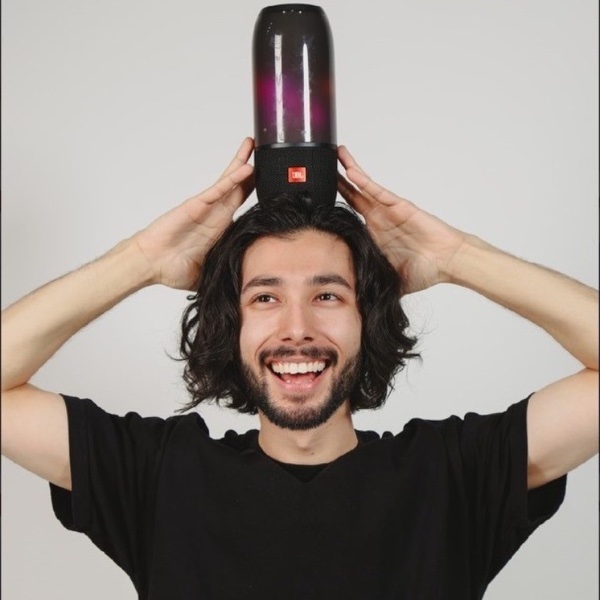
Zach Oscar
Senior Account Director, Viral Nation
Zach works at Viral Nation, a global creator and social-first agency behind some of the largest brand and influencer campaigns in the world.
Zach Oscar of Viral Nation on how the world's biggest creator brand is really built: on trust, reach, and the relationships nobody sees.
Watch or listen to the full episode
Audio edition
If I can make cool shit for the industry, if I can do cool shit with creators, and they can genuinely feel connected to what we are having them do, everything else will follow.
Gaming audiences are used to seeing real gameplay. No one is pre-ordering games anymore off of a trailer, because it could be shit and we do not know.
Creative should never just be repurposed for gaming audiences. Gamers want to see content tailored to them, and that tailoring pans out better in the end.
We are not looking to replace people, we are looking to amplify people.
Takeaways
- 01 Gaming audiences reject repurposed traditional advertising, so creative built for TV rarely lands when dropped onto Twitch or YouTube without being tailored to the community.
- 02 Gaming and esports must be kept mentally separate: nearly everyone games in some form, but only a small, highly trained minority compete as esports athletes.
- 03 The strongest influencer partnerships are always-on retainers and multi-touchpoint relationships, not one-off fixed-fee posts, because they let a creator genuinely integrate a product into their life.
- 04 Authentic fit between creator and product matters more than reach, since audiences instantly sense when a creator is only promoting something for the paycheck.
- 05 Streaming platforms let brands show products and services in real time, which is decisive for gamers who now wait for reviews and gameplay before ever pre-ordering or buying.
- 06 Brands win in gaming by giving the community something back, like discounts, codes, gifted subscriptions, or unique in-game rewards, rather than just asking for a purchase.
- 07 Brand safety is now a core, AI-augmented discipline at Viral Nation, where tools like Viral Nation Secure scan and contextualize creator history while humans audit every flag.
Chapters
Times are aligned to the audio edition.
- 02:20 Why gaming and traditional sports sponsorship rhyme
- 03:39 Gaming versus esports, the pickup game analogy
- 06:49 The Super Bowl and why gamers ignore repurposed ads
- 16:51 Riot Games x Louis Vuitton: meeting fans where they are
- 20:49 Getting laid off during Covid and taking the leap
- 22:07 How a Twitch exec sharing his article changed everything
- 24:41 The AT&T 5G roadshow with TimTheTatman
- 30:47 Fixed-fee posts versus always-on creator retainers
- 33:13 Managing campaigns with over a thousand creators
- 35:42 Viral Nation Secure and AI-assisted brand safety
Transcript
Zach Oscar, Senior Account Director at Viral Nation, joins Vishnu to unpack how the world’s biggest creator agency really operates: through authenticity, reach, and the relationships that audiences never see. The conversation runs from the difference between gaming and esports to the unglamorous work of brand safety at the scale of a thousand creators.
Vishnu: Hi everybody. My name is Vishnu, and we have Zach Oscar here. He is an account director at Viral Nation. It is a pleasure talking with you, man. You have a really interesting background. One of the things that stood out was your experience with esports advisory, so we will touch on that for sure. But if you want to introduce yourself, please go ahead.
Zach: Yeah, sure. I’m Zach, and thanks for having me, Vishnu. As you mentioned, I’m a Senior Account Director at Viral Nation, where my client is Meta. So all the work that I do day to day generally focuses on Meta and the work we are doing there. I come from a background very much focused on gaming and esports, which you touched on. I’ve only been agency side thus far in my career. First, I was on the insights and research side of the house, then I moved more into the client services and account side, which I’ve stayed in. And I’m really enjoying being part of this marketing industry and getting to work on communities that I am passionate about, gaming mainly.
Vishnu: Awesome. How does the industry work in general? I have some experience with the influencer marketing side of the business. Briefly, with one of my co-founders, I set up a small project to see if it was a viable agency, connecting agencies with influencers. It kind of fizzled out, but I learned a lot from the project. I’m curious how you are positioning in the market, and how you specifically relate to Meta and their accounts.
Zach: Sure. On your first question about how the industry works, broadly speaking, sports sponsorship has been happening forever, right? People love traditional sports. And in many ways, the gaming and esports industries are similar to the things that people love in traditional media. So Love Island is happening in the US right now, and what you have seen is that a lot of the commercials airing on Peacock for the Love Island episodes feature talent that have been in previous seasons of the show.
The same thing happens in the gaming and esports ecosystem. Those people are probably not as media trained, although I don’t know that you could argue people on Love Island are media trained anyway, but they are authentic. They are nerds like the rest of us who enjoy the space. And the space has become so broad. When Fortnite first entered the scene, people like Travis Scott and Drake and football players all started to play these games, stream them, and do collaborations with other major content creators in the space.
So I’m yapping a little bit, but what I really mean is that the way this industry functions with influencer marketing isn’t necessarily that much different from anything you see in other influencer marketing spaces. However, I would argue that the gaming industry as a whole, which is a big reminder you have to keep mentally separated from esports, is distinct. Not everybody is an esports athlete. What I like to say is, let’s say you and I went to a basketball court and started playing a pickup game. We are not going to say we are in the NBA. We are not going to say we are basketball players. We are just having fun, right? That is the separation between gaming and esports. Everybody can be a gamer. Everyone probably plays some kind of video game, whether it is on their phone, computer, or console. But not everybody is an esports athlete. I know some people laugh at the use of “athlete,” but it is a lot of training, time, and energy that people put into becoming the best at their craft.
So this is all to say: similar industries, and influencer marketing has a very clear through line between them, which is that people want to hear from the voices they consider authentic in the space. That is what I seek to do in all of my work, whether it was with previous clients like Samsung and AT&T, or with my current client, Meta. We want to find creators who are organically passionate about the products or services that we are marketing. Of course, none of my clients want to hear me say this, but the goal is to sell, make money, and drive business goals. To me, that is achieved if I achieve my own goal, which is to make cool shit for the industry. If I can make cool shit for the industry, if I can do cool shit with creators, and they can genuinely feel connected to what we are having them do, everything else will follow.
Vishnu: Awesome. The marketing industry has changed. A hundred years ago we basically had television, where everybody in the world sees the same ad. Then you got newspapers and radio, and it narrowed down with specific types of ads. Over the past ten or fifteen years, the types of advertising have become extremely niche. People who play Valorant versus Fortnite might not be the same audience, and if you have a specific ad for Valorant with specific creators within Valorant, custom projects convert much better. So it is starting to get so one-to-one that it is an interesting industry altogether.
Zach: Well, you mentioned something about the different types of audiences, and I think what people miss is that traditional media marketing doesn’t necessarily land with gaming audiences. The Super Bowl is the only time anyone gives a shit about commercials. When the Super Bowl is happening, everyone is like, “Oh, I’m tuning in, and oh my God, that Budweiser commercial made me cry.” At the end of the day, the Budweiser commercial has some dogs and a horse in it. It has nothing to do with beer. But as Freud taught us, everything can be subliminal messaging for something else. The point is to drive feelings of warmth and nostalgia that make people associate it with that drink.
In gaming, that’s not really how it works. Some companies will try the same thing, where they take a known content creator, slap them in an ad, and assume everyone is going to be excited. But the reality is gaming audiences are used to seeing real gameplay. If a game is being marketed to them, yes, a trailer or a cinematic that shows really awesome action sequences is cool. But what does the game actually look like? How does the product or service actually impact the user? The glitz and glam of putting filters on images and trying to make it look sexy so everyone thinks it is the best thing since sliced bread, gaming audiences aren’t as susceptible to that as people might think.
So where I’m going with all that is that creative should never just be repurposed for gaming audiences. If I’m making a Bounty paper towel ad for regular TV, it is highly likely it is not going to land at all with anybody if I just put that same commercial on Twitch. Gamers want to see content tailored to them, and that tailoring will pan out better in the end. I know, as someone who grew up as a gamer his whole life, that up until the late 2010s gaming was considered a nerd’s hobby. It was like, “Oh, people are in their mom’s basement, they barely hold a job, they’re smelly,” all that stuff. But I feel seen when I see highly produced and interesting commercials or integrations or sponsorships with creators. I’m like, okay, this brand realizes I’m actually a valuable customer, and that many people are not the stereotypical version of what people think a gamer is. Those ads and sponsorships demonstrate a commitment to saying, “Hey, these are all regular people, and we want to make sure they feel represented in advertising.”
Vishnu: Gaming has become more and more mainstream. Comic Cons are blowing up, and older people are starting to game, both starting from zero and continuing from their childhood. People used to drop off after a certain age, but you see less and less of that now.
Zach: I think about this all the time. I’m about to turn 30, and I’m not an older person by any means, but I’ve realized that gaming with my friends, many of whom don’t actually live near me anymore, is a central part of my life because it is a social network for me. It is not something I think I’ll ever end up giving up, to be honest. Some people say, “Oh, you are going to get married and have a kid, and then suddenly priorities change.” I think priorities were different for different people growing up, and gaming was never that captivating for them, or if it was, it was rare. Now we have entire worlds online that people stay connected through. So I think it is a good shift.
I don’t think it is necessarily great for the social intelligence of a lot of people, but hopefully there are more people with that middle ground, where they not only go outside but can be inside too, and be social in all the different ways. I know we went on a bit of a tangent about the social implications, but I think it is important to recognize the growth of this audience, and the fact that it is becoming very stereotype-agnostic. Everybody kind of games now, in some form or another.
Vishnu: What specifically is different about advertising for gaming? You slightly went over this, but within gaming there are a bunch of aspects specific to different games. What differentiates gaming ads from, let’s say, traditional media? Is it the hooks, the messaging, the types of emotion you invoke? Where exactly do you think it stands out or differs from the other channels?
Zach: Sure. If we are talking about a traditional television-style commercial, it is not necessarily that different. But if you took the same creative from a traditional commercial and put it into something targeting Twitch channels, it wouldn’t really be that engaging to anybody. People on their native gaming platform want to see creative tailored to them. So the differences will generally be the use of IP and the creators or celebrities that are involved. You want to see people who feel authentic to the space, not just, “Oh, they put a Bounty paper towel commercial in here because it is a Bounty paper towel commercial.”
Now, something traditional advertising doesn’t really do that streaming services have made possible, and when I say streaming I don’t mean television, I mean Twitch and YouTube Live and Kick, is that people can see products and services in real time. So one north star we always have with our marketing on Meta, and I actually think it is a great principle outside of gaming, is this. I’ve spent the majority of my time at Meta working on the Meta Quest, which is the VR and MR headset, virtual reality and mixed reality. I’ve also done some work now with the Meta Ray-Ban Display and the Ray-Ban Meta, which are two different products. What we are always trying to do is actually show people the product or service in action.
With streaming on Twitch and YouTube, that is tantamount to everything else, because no one wants to hear a creator say, “Oh, this is the best game since sliced bread,” see two minutes of curated gameplay, and then have it end. People want to see what it is actually like to feel and play the game, the pacing, how it looks, how it runs. My friends and I say all the time, “I’ll wait to see the reviews when it comes out.” None of us are pre-ordering games anymore off of a trailer, because it could be shit, and we don’t know. Whereas in traditional advertising, beer is basically beer. Some people are going to like it and some aren’t, but the commercial might make them want to try it. The commercial is never actually dissecting the hops percentage in the beer. I’m not a drinker, so I don’t know, but they are not breaking those things down in the same way.
Vishnu: So what kind of industries are surprisingly moving into influencer marketing and gaming specifically, where you think, “Hey, this is a new trend I’m picking up on”?
Zach: I’m going to separate from influencer marketing for a second and focus on broader marketing to games. To me, the question is always what, especially in gaming. Lifestyle is a little different, because it is really, “Could this lifestyle product help me in action?” With the glasses, for example, if I’m showing you that I’m catching POV footage and asking Meta AI things, that pretty much demonstrates itself. In gaming, if I’m going to disrupt the community on Twitch or YouTube and be a sponsor, something I’m always trying to think about from the jump is, what am I doing to give back to this community for their time and attention, and for taking their favorite content creator’s stream and collaborating with them to market something?
So if you are not able to say, “Here is what somebody viewing this content can get out of it outside of just making a purchase,” you are likely not to succeed very far. This can be anything from discounts to codes to gifted subscribers to unique in-game rewards if you sign up through different codes. The point is to give them something where they can say, “This is adding to my experience as a member of this community.”
A really great example of this, separate from influencer for a second, is Riot Games, the creators of League of Legends. They have done a number of fantastic collaborations. For example, they worked with Louis Vuitton, which already makes you go, “Hmm, high fashion house, video game, what is going on here?” What they did was create a skin, an in-game cosmetic for certain characters, using the Louis Vuitton monogram, co-developed with one of the Louis Vuitton couture designers. So they had a real person at Louis Vuitton talk to the designers at League of Legends and say, “Here is how I would make this character’s outfit,” and that was created. The skin was maybe twenty dollars in game, and that is a lot for a cosmetic in a digital game. But most people are not dropping hundreds of dollars on Louis Vuitton, or if they are, it is something they save up for and take their time with. This is an example of something that is instantly gained. It is a twenty-dollar thing, and if you really wanted it, you own it forever. You own this piece of Louis Vuitton forever.
So it feels more like the brand meeting consumers where they are, rather than saying, “We are Louis Vuitton, you should want to come buy luggage because we are the official luggage sponsor of League of Legends.” That would be stupid. Sure, it might be exciting and interesting to people, but realistically, how many people in the audience are buying a Louis Vuitton trunk? That is what I mean broadly.
Vishnu: Interesting. It could also be an essential ladder, getting a skin first and maybe a bag later, making multiple purchases. That is quite interesting. How did you end up at Viral Nation?
Zach: Good question. To go into a little bit of my background, I started off in market research, as I mentioned. At that time, gaming clients were not on my radar. We happened to work with a few gaming clients, and as a passionate lifelong gamer, I was like, “Wait a minute, could this be?” I was seeing the data and insights coming out of the studies being run by the company I was with at the time, MRI-Simmons, and a lot of the studies were clearly written from the perspective of someone who didn’t really understand the gaming space. They were misqualifying different genres or titles, or assuming there were certain features of certain games that really weren’t there.
So I set out on a bit of a mission to correct that. I wanted to get in the room with people at gaming companies and pick their brains, asking, “What would you want in a research study that we aren’t providing at the moment, that we could provide to help elucidate these mysteries about gaming consumers?” From there, I realized the gaming industry has a lot of facets outside of simply the creation of games. Growing up, for me it was like, if I wanted to work in video games, it meant I had to be a designer. I had to learn how to create a game or write a story for one. It was all about game creation. But in reality, there are so many facets of the gaming industry that exist for peripherals or marketing of games. There is a lot of opportunity to be involved.
I was laid off from a company I was at when Covid happened. A lot of the company got cut. Covid put a lot of people out of work. It wasn’t for any lack of availability. They basically said to me, “We can have you exist in this HR function.” It was suddenly a moment where I might have pivoted careers, and I was like, no, I don’t want to do that. So I ended up taking a bit of a leap of faith, accepting a severance, and leaving the company. I dedicated a lot of my time and energy to writing articles about the gaming and sports space on a publication called MediaPost. I was lucky that my dad knew one of the writers there, so I asked him to connect me. I said, “I have a lot of opinions on the space, and I am the audience that a lot of marketers are trying to reach right now in gaming. I think I have important things to say, ways to dispel myths and help educate.”
I got lucky, because one of the first articles I put up ended up being posted on LinkedIn by a pretty senior person at Twitch. Somebody at Twitch put up this article of mine, and I remember it very well. He was like, “If you do anything with your weekend, read this piece about the differences between gaming and sports, because it is really important to understand when you are trying to target these audiences.” He said so many brands he spends time talking to don’t understand this delineation. And so there I was, kind of faking it till I made it, writing these articles, and suddenly I had engagement from people. I was able to go to people and say, “I’m a columnist for MediaPost and I’d like to interview you.” I wasn’t anybody. I was totally faking it. But people were willing to meet with me, and I wrote what I think were good articles, maybe a page or two each. I wrote a number of them and ended up getting traction.
At the same time, I started doing esports advisory, which you mentioned. I ended up consulting for some brands who said, “We would love to have you come in and present to us about what the gaming space is, understanding it, and how to think about it.” So I got very lucky and was in the room with American Express, Fox, and a couple other brands and media companies, just telling them, “This is what the gaming space is for a layperson’s understanding, and these are the questions you should ask yourself as an advertiser or media property about how you get involved.”
And so I ended up landing a gig at Wasserman, one of the biggest sports marketing agencies in the world, independently owned, now known as The Team. So not part of WPP or IPG or any of those. I was working on the gaming and esports account for AT&T. AT&T did, and does, all of its business with The Team for sports sponsorship, including basketball, golf, all that. I was one of the account folks on the gaming side. I really cut my teeth there for two years. In that time, I did a lot of sponsorship broadly. It was not only sponsoring esports teams the same way someone would sponsor the Lakers or the Knicks, a very similar setup, but also working with influencers directly to make bespoke campaigns to help market our products and services.
A great example of this was the AT&T 5G roadshow we did, where we took a big influencer in the gaming space named TimTheTatman. We took him on the road and brought him to three different iconic locations across the US. Using AT&T 5G, he would stream from those locations and play his favorite games, and we would throw in all sorts of surprises and interesting things. Do I think that activation necessarily got people to go, “I’m going to switch to AT&T right now”? Not necessarily. But what it did do was help ingrain AT&T as an essential product and service to the success of that streamer. As people in his audience who are not necessarily their own homeowners or renters yet get older, they are going to say, “I’m going to get AT&T internet.” It is all very ironic, considering that in most places you don’t really have a choice of your internet, especially in New York City, where they divvy it up by zone. But it is a nice way to get people to have a positive affinity with these products and check them out for themselves when they are able.
Vishnu: That is awesome, man.
Zach: Oh, and sorry, your question was how did I land at Viral Nation. So I did that for two years, then I changed agencies. In doing so, I realized I thought influencer was the most engaging part of marketing to gamers, because let’s be honest, when is the last time you gave a shit about an icon on someone’s jersey? Do you even know what they are?
Vishnu: Yeah, I don’t even recognize them, honestly. I don’t know.
Zach: Right. I don’t remember the last time I cared about someone having a rotating logo bug on their stream, or “Honda is the official sponsor of the Chicago Bears.” I don’t care about that. What I care about is my favorite creator, who I love to watch, who plays similar games to me, saying, “Hey, I’m checking out this game, I actually really like it, you should check it out.” Or, “I’m going to be playing this, and there’s a skin we’ve made with Activision Blizzard in Call of Duty, and you can get my skin.” Those are the things that make me excited to support my favorite creators or brands. Not, “Oh, there’s a very passive logo placement, isn’t that great?” Attribution is still a very difficult subject across all advertising and marketing, but nothing sounds more boring to me personally than trying to determine where someone decided to buy Adidas sneakers from. Was it a digital ad, a billboard, a commercial? We don’t really know. We just assume it works because we are putting our brand in front of them enough, they are aware enough of our brand, they are seeing enough of our content, that they decide to buy it. Whereas in the gaming space, there is a very direct pathway, like, “Oh, I saw this game, it looks fun, I’ve seen someone play it, and now I’m going to buy it.” Does that make sense?
Vishnu: Yep, absolutely.
Zach: So I decided that of all the ways you can market to these audiences, influencer was probably the most authentic. Because in everyone’s ideal world, I’m not hiring John Smith because he is one of the biggest creators and he is just going to put my shit out there. I’m hiring John Smith because I think he will actually really like this product. Hopefully, if he does, he will organically integrate it into his existence, and that will cause an actual uptick. Whereas if you are marketing with influencers and it is clearly just that they are doing it for the paycheck, no one cares.
So I went to another agency, became dedicated to influencer full-time, and was working on multiple accounts, some of which had smaller budgets. Candidly, AT&T had a massive budget for the gaming space at the time, especially back in 2020, when it was still relatively burgeoning. I realized I actually prefer to do big, cool shit with a brand that has a lot of money to invest in the space. That is part of what led me to Viral Nation. I saw they needed someone to come in and lead an account with a gaming focus, so I threw my hat in the ring and ended up there.
Vishnu: Pretty cool, man. Very interesting journey. What kind of deals do companies make with influencers and gamers? Because it may or may not be well trackable, with the attribution issue you mentioned. How do they price the service the influencer is providing?
Zach: Meaning how are we evaluating whether an influencer’s cost is fair? Or what do you mean by that?
Vishnu: That is one part of it, but also how are the influencers compensated for promoting a specific product? And do they have a tenure, like, “You are going to be my sponsor for a year, six months, or just a trial project”? How do you normally negotiate such a contract?
Zach: It depends on what the client is asking for, really. A lot of times it is a very straightforward, one-off campaign, where it is, “We have this product launching, an update to a product launching, and we want cutting-edge tech creators to help us demonstrate the product and service to people.” Those will be what we call fixed-fee contracts, where we are saying, “One TikTok video, one Instagram Reel, and you are going to put a link in your bio for 24 hours, and we are going to pay you 50 grand,” whatever it is.
Most often, the best partnerships tend to be, as you say, the ones on a retainer. We say, “For a year, we are going to sponsor you in what we would consider an always-on program,” meaning you are an ambassador for our brand for an entire slew of time. We will of course pay for things like exclusivity, so they are not working with competitors. Although, having been at enough agencies, I think exclusivity is kind of a myth, because so many times, if anyone at the other brand is doing the job I do, they are going to see that this creator has started posting about PlayStation and not recommend them to Xbox, because that would be dumb. So exclusivity cracks me up. We pay for it a lot because we don’t want them talking about competitors, but realistically I don’t think a lot of competitors are going to want to dip their toes in somewhere that is already talking about a direct competitor’s product. That is neither here nor there, just a little aside.
But yeah, we structure a lot of deals differently based on the asks. If you are really looking to ingrain yourself with a creator and their audience, one-offs or month-long campaigns are never as strong. It is always going to be multi-touchpoint partnerships, where we develop a relationship with the creator and their team, they understand our goals, and they actually like the product. I can’t emphasize enough how important it is to find people who are a good fit.
Vishnu: Right. If you don’t find a good fit, it doesn’t make sense.
Zach: Yeah.
Vishnu: Cool, man. What’s next for you? What are you looking forward to?
Zach: Right now I’m very fortunate, in that I’m working on these Meta campaigns at a scale I’ve never worked on before. I’ve worked with quite a number of creators in my time. I’ve done campaigns with 20, 40, 60 creators at one time. Right now we are in the process of working with probably over a thousand creators at once. So that is a really delicate process of not only managing the client, but also managing the team and making sure the tools and resources we have in place are able to withstand the scale.
Viral Nation, I’ll say, I’m not normally a corporate, toot-the-horn kind of guy, but VN is definitely at the forefront of influencer marketing and the space. Our co-founders, Joe and Matt, have been in the space since it was not really an industry, over ten years ago. They were the ones talking to the Paul brothers back when they first started, and now they are household names doing WWE and all that. They don’t still work with them, but originally it was signing all these different creators and saying, “Hey, you should be active on your Instagram, you should be active on your TikTok. Let’s build this persona and presence for you.”
To answer the question more directly, we are making a lot of really great developments around brand safety, which I think is not often talked about openly. People say all sorts of crazy shit on social media and on their profiles. As I’m sure you know, and as everyone does, there are so many situations where a brand works with a creator, and then suddenly some internet detective who is a high schooler will be like, “Didn’t this person say a racial slur three years ago?” They will have the video and everything, everyone will be like, “Oh my God,” and the brand will cancel the partnership right away. Then it is damage control and all this stuff.
So we have done a lot of work, and I hate to say AI, because everyone is saying AI right now, but we have done a lot of work to enhance the human touch element that we consider core to the business with AI tools that make the job easier. We are not looking to replace people, we are looking to amplify people. Part of what that means is stopping the manual process of, “I’m going to go through this creator’s page and their history, scroll back on their Twitter, and see if I notice anything weird,” which of course is not foolproof. We switched to a tool we have called Viral Nation Secure, where we are able to upload people’s profiles into a database that scrubs for keywords, violence, racial slurs, and so on. We are able to calibrate the AI tool to scrub and transcribe video content, which I think is big, because there are a lot of situations where, if I see a video of someone playing Call of Duty shooting a gun, an AI tool might normally say, “There’s a gun, red flag.” But we are able to contextualize, so if the gun is in the context of a video game, if you are picking up on those context clues, like it is in Call of Duty, or there is a video game or a controller in the shot, we can ignore those flags.
But there is still a person who will audit all of the flagged posts to say, “Is this really a flag, or should this be considered fine because of the context involved in the video?” So we have a really robust team that works on this, and I think it is really helpful for not only vetting creators upfront, but also monitoring them as they go through our partnership. We don’t want to just say, “You’re in the door and everything’s kosher.” We have to keep tabs on people. And that is not to say we are looking for you to mess up. We just want to make sure that whatever you are doing organically in your time and place is aligned with the values of the brand.