Episode 4 · June 25, 2026 · 47 min
Jean Middleton on focus, priorities, and doing the one thing that matters
Watch or listen to the full episode
Audio edition
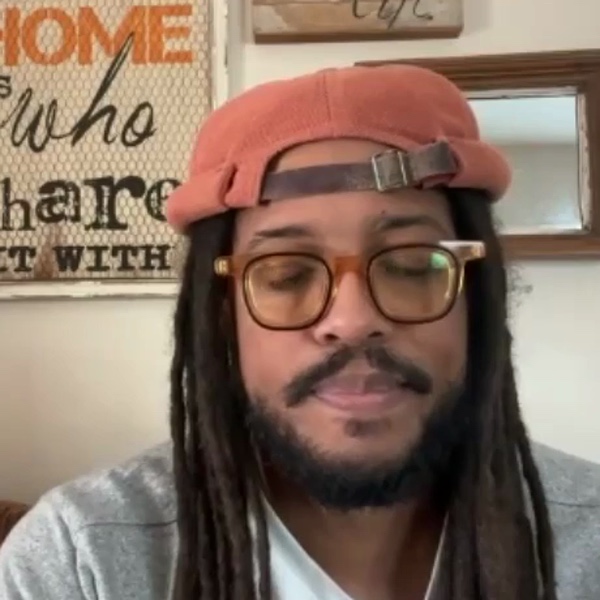
Jean Middleton
Founder, The Priority Project
Jean runs The Priority Project, helping people cut the noise and build their work and life around what actually matters.
Jean Middleton of The Priority Project on cutting through the noise and building a life and business around what actually matters.
You cannot scale your life alone.
If you hit the ball three out of ten times, you are an all-star.
You are the product. If the product is great, you do not have to ask anybody to buy it.
There is no amount of money that is going to give you the self-discovery that you are looking for.
Takeaways
- 01 Jean built a painting business to half a million dollars a year during COVID, then deliberately shut it down because the company would collapse whenever he stepped away, proving the model was not sustainable for him.
- 02 Real success is self-definitive, not what television, advertising, sports, and money tell you to chase, and chasing the external version leaves many high earners wealthy on paper but unhappy.
- 03 High performers invest in coaches, trainers, and doctors for physical performance yet ignore their mental performance, even though that is what actually keeps them in the game.
- 04 Priorities are not fixed; they should be reshuffled every season, the same way a business reruns its P&L each quarter, so they stay aligned with the stage of life you are actually in.
- 05 Growth starts from within and expands outward, so there are no shortcuts to self-discovery and you always have to start your journey from one, no matter how much money you accumulate first.
- 06 Jean's current order of priorities is health first, then family, then finances, on the logic that if he is not healthy he cannot be happy, and if he is not present the money does not matter.
- 07 The joy is in the process, not the result, so being patient and present while you climb is the point, because the deal closes, the trip ends, and there is always another mountain after the summit.
Chapters
Times are aligned to the audio edition.
- 02:22 Why Jean created Whole Success
- 06:57 Scaling a painting business to half a million a year
- 08:13 The Hawaii vacation that changed everything
- 08:54 Shutting the business down and taking profit
- 16:35 Why founders need a coach for mental performance
- 20:03 Entrepreneurship is hitting three out of ten
- 24:27 Reshuffling your priorities every season
- 37:07 You are the product
- 37:34 The blind man in the locker room
- 42:41 More fun in the line than on the ride
Transcript
Jean Middleton, founder of The Priority Project, joins Vishnu to unpack what happens when you chase the wrong version of success. From scaling and then deliberately shutting down a half-million-dollar painting business to building a practice that helps founders and creators reprioritize their lives, Jean makes the case that the joy is in the process, not the result.
Vishnu: Hey guys, I’m Vishnu. I’m the host of this podcast. We have Jean with us here. He is a creative director, creative producer, and operating leader. He’s the founder of his own company, The Priority Project. I’m glad to have you on, man. Thanks for hopping on.
Jean: Appreciate you, Vishnu. Thanks for having me, bro.
Vishnu: Absolutely. Tell me a little bit about yourself, man.
Jean: Yeah, man. So, as you said, I run The Priority Project, and I also work with Suite Creatives as a creative operator and consultant. I’ve been in the creative industry for quite a long time, coming up on about 16 years. I spent a lot of time in advertising and marketing, and that’s where I kind of discovered my niche, what I’m good at. That’s why we’re sitting here with you today, discovering your podcast and some of the things that you’re doing yourself. I’m just here as a vessel for the creative people, for founders, helping them with the outlets they need to live a whole, successful life. That’s kind of where my journey has landed me.
Vishnu: Awesome. What kind of people do you work with? You mentioned founders, you mentioned creatives. Tell me about that.
Jean: Yeah, sure. This is a great time to be alive. We’ve had the privilege of seeing so many people found companies, we’ve seen technology evolve, we’ve seen AI bump up our productivity and help us create quicker. But in that creativity, we’ve discovered the gap that it’s led us into: overworking, burnout, and stifled creativity. With that gap, I discovered that a lot of people weren’t taking care of themselves mentally enough to really give themselves the opportunity to grow companies and still feel like themselves as the company grew.
At that point, I created something called Whole Success. You can read about it on my Substack. The concept is that while you’re growing, if you founded a company or you’re a creator in the middle of your projects, you want to feel whole. You don’t want to lose yourself in those projects and in the growth that you’re having. So we’ve created programming to help people feel whole again and find their original selves.
For me personally, I have a very deep, empathetic story about chasing millions of dollars and trying to discover what success feels like. Through that journey, I finally realized that it’s a very subjective situation. It’s self-definitive. What does it mean to you? I found what it meant to me, and it brought me back to my whole success. So the conclusion is that I look to help founders and creators reprioritize their lives. A lot of them have not prioritized correctly. Normally you’ll find that they put money at the top of the list, the pursuit of it, and they kind of lose their way trying to understand who they are and why they started the journey they’re on. That’s where I come in, as a personal coach, somebody who can lean in with them and help them rediscover who they are as a whole person.
We also understand that there’s a technical side to that. It’s not just holistic healing or helping you discover who you are; it’s also giving you the right tools to help you do less more often but get more done. So we lean into a lot of AI and technology too. One particular product is called the Creative Suite OS, which is a dashboard built for creators that actually allows them to learn how to count better when scaling. Our discovery there was that the number one issue creators have is that they understand revenue, but they don’t understand where the money is going and where it’s flowing. So we help them with that, because we know that’s a big stress point, a big pain point.
Vishnu: Awesome. There are so many threads I can pull. I’m thinking about the product, but I’m also thinking, why don’t we talk a little bit more about the journey? You mentioned you’ve been through chasing the multi-million-dollar goal, but then you figured out that may not be the goal. Walk me through that, and then we’ll probably talk about the product itself.
Jean: Yeah, man. So I think around the early 30s is where a lot of pressure starts to approach those of us who have been in a corporate lifestyle or the entrepreneurial ring. We’re trying to figure out how we define our own success. We’re starting to really hone in on our friendship groups and things of that nature. Around that age for myself, I realized I had a bunch of ideas. I was very successful working a corporate lifestyle, and there were things I was really great at, but I had these ideas I wanted for myself and I couldn’t figure out how to do them. I had the resources and the tools, but it was like a puzzle. You pull the big box out on the table and figure out where everything goes.
After I mixed up those puzzle pieces and realized where they go, I went back to something I was raised on, which was carpentry. I figured out it was the lowest hanging fruit. So I partnered with a construction firm, because I always learned from business school how to scale. I worked with the gentleman there for about four or five months in the beginning, and then he allowed me to take a piece of the business and go off and create my own painting business. During COVID, I scaled a painting business up to half a million dollars a year, which was great. We were all like, oh man, it’s amazing.
But where my breakdown came was the amount of hours and time it took to build that really broke me down a little bit. I distinctly remember this one situation. I got up to eight employees, I brought a partner on, and the month before that was my first month crossing the $50,000 barrier. I was really going. I had reached out to people about property, getting my own garages to paint inside. We had reached out to technology companies, because cabinetry was our specialty. We had reached out about the coolers, the heaters, everything that was going to make that assembly line move.
So I remember going, okay, I need a vacation. I think I need to take a break. I went to Hawaii, and the only thing I could think about was what I wasn’t doing while I was on vacation. So I really was not on vacation. When I came back, it all fell apart. My clients called, oh, I didn’t get this, and it made the work ten times worse. I realized that the business failed if I wasn’t present, if I wasn’t around. So I said to myself, this is not sustainable, I’m going to burn out.
It was at that point that I did something very hard. I shut the business down and I pivoted. I took my profit. You know how when you’re trading you say take profit? I took my profit and I pivoted to something that felt more like the center of who I was. I realized that even though my father had taught me carpentry and I was good at it, that part of me reminded me how to be humble, how to be calm and steadfast in something and be consistent. After I got that reminder, I was like, now it’s time for me to move on to purpose.
That drove me into what I do today. I’m really an individual who lives life with the desire to have experiences. I believe wholeheartedly in the human experience. I think you’re here to experience things: the good, the bad, the beautiful, and the ugly. Sometimes we forget that’s really our reason for being here. We take the motivation to hedge success so seriously that we forget to be present while things are actually happening. Hence why we named it Whole Success. People tend to get a little bit lost in the pursuit of all the things that television, advertising, sports, and money tell us we should have. We began to shift our perspective and think that we would love ourselves more if we had all those things.
So I knew that if I could eliminate that for myself, then helping others discover those perspectives would really turn them on to a lifestyle where they could be happy even when things weren’t going their way. They could have a stillness about themselves because they understood themselves. My story is, I had that nervous breakdown, but I realized that what goes down must come up. In that recovery, those three or four years of recovery, I spent a lot of time getting into purpose and understanding the experience of purpose. That’s really where I’ve landed today.
Now my life is very whole. It’s very journalistic. I make sure to be checked in and present with what’s actually happening, and I’ve refiltered the priorities in my life. As you said before we started our conversation, you were looking at me like, what, you have an adult child? But the youth comes through in how we live. It’s really not about our perceived societal age demographic, because society will tell us you’re supposed to have this done by this age and that done by that age. But it’s very obvious to me that when we discuss life, we have to discuss our mortality. Discovering that there’s an end to this, I realized I don’t need to rush to it. I want to live through it. My journey made me understand that I should probably enjoy as much of this as I can. I want to enjoy at least 80 percent of my life while it’s happening. I don’t always want to be waiting for something to happen for me to enjoy it.
Geez Louise, we’re just getting phone calls now. Normally my phone’s not this busy. No one bothers me. But this is where I’ve landed in my life, just being appreciative of all the things that have taken place and loving where I am. My journey has led me here, man. It’s got me really grateful for everything that’s happened. Like I just told you, I just spent three years in Puerto Rico. I joke with everyone and say I’ve been on vacation for three years. A vacation is a vibration, but it reminds me of the Hawaii story, because living in Puerto Rico is where I had my biggest breakthroughs and my most success. My physical body was limited, because I didn’t speak the language very well and I didn’t have to, since my wife is from the island. So I really had to use my spirit and my brain to come up with new ideas for these creators, to get them to understand that there are two different worlds: the physical world and the spiritual world. When that physical body has to rest and the mind has to work, it’s a totally different aspect of what success is defined as.
Vishnu: You’ve hit the problem of all, if not most, founders. Same story with me. I’ve been in corporate, I would say quite successful in corporate, and then I thought, hey, the same skills would translate when you start a business. They do not. So you’re never really ready.
Jean: Yeah, exactly. You’re never ready. It’s still going to be a journey regardless.
Vishnu: And it’s just a series of failures after failures. You’re trying to figure it out, and it takes like 20 of your 24 hours trying to figure it out, and then it impacts your mental health. The successes hit hard enough that they keep you going, and then the failures are also there. It’s an emotional journey. But yeah, you’ve been through it, so you know it. It looks like you’ve set up a system that helps people who are yet to get into that issue, or have already experienced it, to pivot and position themselves in a better way so they’re successful in a more organized way, I would say.
Jean: Yes. It’s really just awareness. One thing I always tell people is that a lot of people are headed to a high level. I try to explain to them, I know it’s odd for you to hire, and I don’t even like to use the word hire, I know it’s odd for you to partner with a personal coach. But if you were an athlete, you’d have a coach and a trainer and a doctor and all these things so that you could perform well. Why are we constantly ignoring your mental performance? It is the thing that keeps you in the game of success, yet you think in your mind that you can figure it out on your own without help. There’s no athlete I’ve met, and my son’s a baseball player, who does it without coaching or training.
So what I do is I assess. I can just look at you, assess, and spend a day with you, and say, I can tell you right now, these are your top three priorities, and those priorities are how you live. But the other side of that is, do you want to be living them? Because if your job comes before your family, you’re going to age faster. If you’re okay with aging faster, I don’t need to help you. If you do it the reverse way and you say I put my family first but my finances are suffering, I’m going to say, okay, what tools are you using to make sure that the time you have for yourself is helping you build what you want to build?
The aspect here is, you cannot scale your life alone. This is why partnership exists, and I also think it’s why marriage exists. We have this conversation all the time. I’ve been married almost 20 years, and I tell people all the time, I think that partnership exists because you literally could not be on this earth without collaboration. You would not be here. So everything we do should come from a collaborative place. If you want to do it alone, you’ve got to ask yourself some really important questions, the first one being why. Why don’t I want to do this with someone? Why don’t I want to experience this growth with someone? Not why am I not doing it, because your time will come, but if you don’t want to, you’ve got to ask yourself why.
There’s just so much space for you to be human in this day and age that you don’t really have to figure it out in one fell swoop. Entrepreneurship is the hardest successful track, and it’s been written and repeated over and over again. It’s like you choosing level 10 in the video game out of 10. You’re going to fail a lot. My son plays baseball, as I mentioned, and we always joke, I’ll be like, if you hit the ball three out of ten times, you’re an all-star. There’s no other space where that accumulates to you being a winner except baseball. So that’s how I look at entrepreneurship. If you hit the ball three out of ten times, you’re an all-star. You just have to figure out where those spots are, and you also have to have a toolbox. When money’s short over here, you’ve got a toolbox. Oh, no worries, I’ll grab this tool and do this work, I’ll grab that tool and do that work. That’s what makes you really great at being an entrepreneur. It literally means being able to adjust and understand that you may not be great at it all, but you understand it all enough to be successful at it.
Vishnu: Very cool, man. Is there a specific process? Let’s say you’re onboarding a new client. Is there a specific process you go through to assess their current situation and discover their goals? How do you move them from where they are? I mean, it’s obviously custom based on where your clients are, but what’s the general trajectory you approach? How do you go about helping them out?
Jean: Yeah, it’s a feeling. It’s discovering what the problem is. First of all, it’s seeing if we’re a fit. It’s just sitting and discovering what your lifestyle is, what you’re prioritizing, the books you read, the books you would like to read, what your day looks like. We try to separate and understand the percentages of how you spend your day, your week, your month. What are your goals? Do you have a five-year plan? We’re just really trying to understand who you are as a human being.
I know all of us humans like to put guardrails on everything we do, but we can’t put guardrails on your humanity. That’s what it means to really be universally connected. I’ve had conversations with some great people. I’m no therapist. I’ve had conversations with very highly educated therapists, but I also realized that there’s a medical way to approach your healing, and there’s also a very humanitarian way to approach your healing too. I consider myself to be that humanitarian who can get you to see different perspectives of how to approach that.
It’s all about the information we’re taking in and how we’re multiplying what we see on a day-to-day basis, and focusing on the things that make us feel good. As humans, we’re really good at focusing on things that make us feel really bad, and trying to solve why we feel bad. But at what point do you just enjoy feeling well and feeling good? So I think step two is, after we discover who you are and some of the things you really want, it becomes self-explanatory. I become your reminder of how to stay steadfast when those things come up that don’t necessarily agree with what you think success should be for yourself.
So we keep prioritizing and shuffling those priorities until they feel like the right alignment. I just reshuffled mine. Priorities are supposed to be reshuffled based on what stage you are in your life. It’s all a project, a priority project. Every quarter, just like you reshuffle the finances at your job or rerun the P&L, you’ve got to reshuffle the priorities in your life too, depending on the season. So I am there to remind you, new season, it’s a new four months, a new three months, time to reshuffle those priorities. Mine for this season: health is number one, top of my list. I’ve broken it down. If I’m not healthy, I can’t be happy. If I’m not happy, I’m useless to my family. If I’m useless to them, I’m not purpose driven. So if I look at all those lists, I’m going health, family, then finances. People will be like, well, how are you going to take care of them? I’m taking care of them with my health. I’ve got to be here to make a living. So you’re saying, well, finances? Yeah, but you can go after that all day. If you’re not here, the money doesn’t matter.
So the mental condition of human beings, sometimes people are like, whoa, I thought I was supposed to be making as much money as I could and everyone would be happy. But they’re really not, because you’re never present. You’re just supplying something in your absence, when really they want you to be present in the moment with them. You’re not really there even when you’re there. A lot of high-influence individuals, CEOs, CFOs, creators, music artists, they have this problem because they’re so busy chasing that they’re not really enjoying the process of chasing. The thrill of the chase, is it the thrill that you’re going after? It should be the process that you’re actually in, not the result. The result is going to come as long as you’re embedded in the process.
So I think the last step is really concluding with yourself and understanding the comfort factor that you can supply yourself. If you can come to a calm perspective with yourself and understand that you’re always evolving, always changing, then we do 12 steps with you. I don’t know if you’re familiar with a book called The Artist’s Way. Check it out, it’s a very great book. That book made me realize there are certain behaviors and habits that create who you are. That’s what’s going to make you get out of your own way to really get to that point of self-growth you’re looking for. It’s a difficult journey. It really is hard. But I would say those three areas initially: discovering who you are, creating that new list of priorities, and then finding contentment with understanding your rhythm of growth. It’s your rhythm. It cannot be compared to anybody else. It’s your vibration, your cadence. Then you’ll find out that it’s a lot more comfortable to be yourself rather than having to wear the mask every day.
Vishnu: Yeah, I like it. It’s basically having that partner who’s been through the journey they want to go through, and having a non-biased perspective from outside yourself, directing them toward the right way they want to go.
Jean: Yeah, yeah. And that’s what leads to it. Out of The Priority Project came Whole Success. It came from understanding so many people I’ve met who have been super successful but aren’t happy. It’ll shock you. The scariest thing for a lot of people I’ve sat down with is their net worth. They’re worth a lot on paper, like you say, and you’re asking really interesting questions, like, wow, tell me about it. And it’s just, ah, you know, I don’t want to talk, I’m over it. You’re like, what? There’s a lack of excitement, and you’re like, wait a minute, you just told me you did three million last year. And they’re like, yeah, yeah. You sit with that when you leave those conversations, because you go, while you were building that, you were giving up little pieces of you at a time. There were pieces of the real you that you sacrificed. Then you got here, and you realized you had given up way more of who you really wanted to be, because it felt like getting here first would get you there quicker, when really you still have to start to build this whole thing at day one.
There’s no amount of money that’s going to give you the self-discovery that you’re looking for, and there’s no amount of contentment either. They say money can’t make you happy. It does ease the physical part of life. I don’t have to worry about that, but you still have to journey to your spiritual understanding of self. You can still be an infant there and be a multi-millionaire. People say, well, aren’t they connected? Yeah, sure, but somebody could be better at the physical world than they are at understanding self. They could be a champion of corporate life, building businesses that scale up to millions of dollars, but if there’s an emptiness of self-worth, those two aren’t synonymous with each other. Happiness doesn’t automatically bring wealth. I’ve seen it with my own eyes. I used to think that if you’re happy, you’ll be wealthy. That’s the truth, but just because you’re well on paper doesn’t mean you’re happy. Those same problems are magnified because you have access to a larger world.
A little boy told me, he said, that ant right there only knows these blades of grass and this brick. If you pick up that ant and move it anywhere, it’s foreign land. You just think about that and you’re like, oh my gosh, the size of that thought. The size of that ant compared to the size of the world is us in a smaller space. Your whole self is a large space. You have to spend your whole life getting to know yourself, and I think sometimes people stop. The happier you are, the larger you are, and you’re more accepting of things, and then you get more opportunities, which leads to better success. But it’s expansion. I think that’s what everyone desires, expansion. We’re all seeking it, but expansion starts from within. Growth starts small and grows out. For some wild reason, human beings think growth starts out and goes in. They’re like, oh well, I’ve got to get this first and then I can do my passion. No, no, that’s not how it works. It doesn’t matter if you get that first, you’re still going to have to start from where I started. You’re still going to have to start the same way you started this company, from one. You’re going to have to start this journey from one. There are no shortcuts here. Even in business, there are a few shortcuts you might be able to take, but in this reality of growing self, only the path that’s for you is drawn out for you.
So I started Whole Success on Substack. It tells my whole story. I’ve discussed it briefly here, but Whole Success shows my whole story. Then we shift the pendulum with Creator Field Notes. The e-book will be done in about a month or so, and then in 2027 we’ll release the full book, Whole Success. Even that journey itself was like, I want to write a book, I love this Whole Success. And I tell myself, wait a minute, before you go rushing to give the book, why would you write the book and rush to that? Because you’d just be chasing selling books. No, you’ve got to really get the story out and discover why you would write the book. Because at the end of telling this story through journaling, through a newsletter, through an e-book, you might be like, we don’t even need the book. So I’ve learned that the whole thing is to enjoy it all in the process. I think sometimes we rush from start to finish so fast that we don’t really love or enjoy who we are or what we’re becoming while it’s happening. We miss out on so much. All of us are so great and can discover that we’re so great. That’s why I’ve built all the things I’ve built, and it took me a while to get here.
I always say, when the student is ready, the teacher will appear. The universe is a great teacher. Believe it or not, you and I, this is my first time someone reached out without me reaching out first. Someone reached out and said, man, can I interview you? And I go, those are points in life where I go, okay, we’ve done what we were supposed to do at these steps and stages. Now the universe is responding to you following instructions about what it’s asked you to do. It’s going to show up for you. The same notion of you emailing me and saying, hey, will you do this interview? Of course, absolutely. Another young lady reached out, hey, will you do this interview? Of course, no problem. These are out of the blue. Another young lady reached out and said, hey, would you be willing to discuss some concepts for shows about priority?
I say that to people just to say that if you really trust what you’re doing, you don’t have to try to oversell it. I was watching a podcast and the guy goes, if you have to sell too much, that means you didn’t take your time on marketing. And if you have to market too much, that means you didn’t take your time developing your product. So if I’m the brand, if I have to market and tell you, interview me, then I haven’t worked on the product as a human. You are the product. So if you have to keep going, interview me, buy my book please, then we haven’t worked on the product. Because if the product is great, you don’t have to ask anybody to interview you or buy the product. We can just enjoy this. I’m naturally enjoying this conversation. This is what I talk about every day. There’s no mask here. I do this with people I love and people I’ve just met.
I was in the locker room the other day, coming out of the locker room, and there sits a man who’s blind. This is a true story, just happened yesterday. This man is blind. He’s playing with his phone, and we’re in the family locker room, and his phone’s loud. In hindsight, I didn’t know why he had the speaking version on his phone. It’s talking to him and he’s listening intensively, and I’m like, oh, maybe he, you know, I’m not thinking he’s blind. He gets up and picks up his walking stick. He walks past me the first time and takes the original path I could tell he took before to get his daughter, and on his way back he turned where I was trying to be out of the way and bumped me. So when he bumped me, I politely touched his elbow, grabbed his hand, and I said, I got you, brother. He said, oh man. I said, no worries. He said, thanks, I appreciate you. And he crossed over to me and sat down. I looked at him and my question was just, how you doing? We started chatting, and somehow we got to the conversation. I said, oh, so what do you do? He’s like, vending machines. And I said, well, how many? He said 150.
So in my mind I’m going, my first thought was, hey, I had been talking to my son about starting him a business, and the first business we thought of was vending machines. So I go, if you put something in the universe, it will respond. I always tell people, I’m very inspired by people who have any type of ailment or disability, because most of the time that just makes them go for it even harder than we do. It’s like, I’ve already had this thing that I can’t use, so I’m just going to go. There’s no theater. I’m already in the dark, there’s nothing else to it but that. He started talking to me, and I’m like, wow. He’s just talking to me, and he’s like, yeah, take down my number, man, I’ll talk to you sometime about how to do this if you really want to. Oh man, my whole mind was blown, because I’m just like, who knew, just talking about it? But on top of that, just his spirit and being so light-hearted, so willing. He can’t see me. All he can do is hear me. So my energy is really all he has to go off of, and the whole time we’re talking, he’s reading me. He’s doing a better job than most humans who look at one another.
At the end, I was polite, because I recognized this is not a situation where you jump the gun and say, well, can I get your contact info? He’s got to ask me. Sometimes we humans are so impatient with the way the world works. I just said to him, man, I appreciate you. And he’s like, well, you can have my number if you want to talk further. And I’m thinking, the patience returns to you. The joy is in the processes you’ve gone through to become great at what you are. I don’t want to know how to buy the vending machines. I want to hear your story. Because the story, that’s what I’m doing this for. The motivation is therapeutic from the story. I’m discovering myself through your story. It’s really not about, show me how to make money. But he’s already giving me tips and telling me what I should and shouldn’t do, and I’m going, these are all mistakes I would have made. I would have rushed into that, and these are all things I would have made mistakes on. It became a great five-minute conversation. He walked out of the locker room, I walked out, his daughter walked out with him, and we just had a great conversation.
But that’s really how life is, if you just spend a little more time being patient, if we just spend time being calm with one another and waiting our turn, because the wait is what makes it fun. I realized you have a lot more fun waiting in line for the roller coaster than you do actually on the ride. I’ve been to tons of amusement parks. I always joke with my dad, because he used to take us to all of them, and I used to be like, do you know we have more fun in the line? He’d be like, the other people, yes. The first time I told him that, I think I was about 35, and he was like, oh, now you’re understanding what life has to offer. Because a lot of people don’t have that perspective. They want to rush through the line. Really, there are more things that happen in those 40 minutes than in the 40 seconds. You’re going to be successful, you’re going to get that big deal, you’re going to close that big contract, you’re going to take that big trip, and then it’s going to be over. And then you’re going to say, this is the mountaintop, I’ve got to climb another mountain. And then you’re going to realize, but it was the climb I was really enjoying. The people I met, what I was doing, all of those things are really what I had a great time doing. It wasn’t me getting there. It was the process of me getting there.
So that’s my goal, that’s my job: prioritizing the process of you getting there with a whole, successful self. And then we give you a few tools, if you need them, to help you understand how to alleviate the pressures you’re thinking about: financing, finances, building credit, all the things that help you maintain your calmness in your meditation state, to lessen your worry and help you organize yourself. That’s our toolbox at The Priority Project. It’s community. We’re more about community and you having an understanding of simplicity. I’m not trying to make it difficult. I’m really not trying to sell you anything. I’m just trying to get you to honor yourself, who you are, what you’re capable of, get some deep insight into your own empathy for self, and get you to slow down a little bit. Because you age yourself. You really do. I can look at you, and if you look older but you’re younger, I can be like, you’re trying to run. Just walk. I know you want to get there quick, but you don’t. Go for a swim, go relax, because really that’s all you have control over right now.
Vishnu: Yeah, that’s it. If you feel out of control, what you cannot control is what I should be looking for. Yeah, man, that’s awesome. You have a very interesting life, man. Very interesting perspective, and I love your energy.
Jean: It’s great. Appreciate you.
Vishnu: So how can people find you?
Jean: You can find me on social media. That’ll lead you pretty much everywhere you need to be. If it’s the first time we’re meeting, find me on Instagram first, then make your way down the rest of the funnel and pipeline. Connect with me on those platforms, please DM me. I’m down to have a conversation. If you’re on the journey of self-discovery, finding yourself, if you’re a high-value creative or a creative just getting started, if you’re a founder just getting started, let me know, man. I’m here to help.
Vishnu: Awesome, Jean. Great person to talk to, and please connect with him. It was amazing talking to you, Jean. I think we’ll end it right here. It was amazing talking to you.