Episode 5 · June 26, 2026 · 43 min
Zack Mukewa on why the best decision today can cost you tomorrow
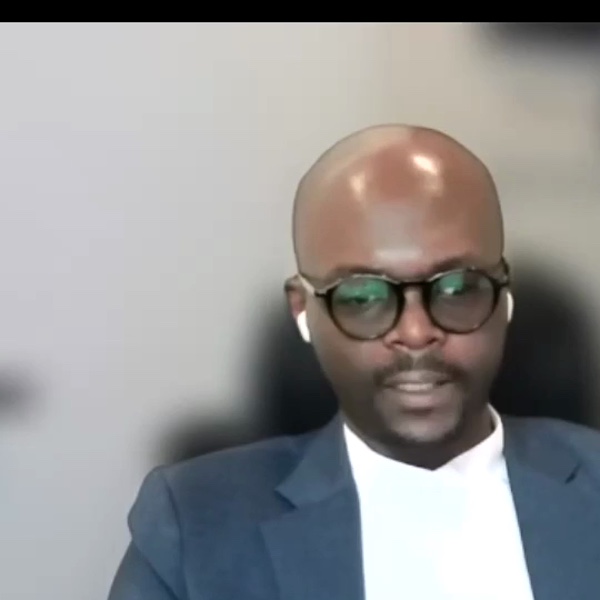
Zack Mukewa
Principal & Head of Capital Markets and Strategic Advisory, Sloane
Zack is Principal and Head of Capital Markets and Strategic Advisory at Sloane, where he thinks deeply about long-term decisions and the quiet cost of short-term wins.
Zack Mukewa on long-term thinking, the hidden price of short-term wins, and how to make decisions you won't regret.
Watch or listen to the full episode
Audio edition
If you are rebutting line by line, you are telling the market the report was worth rebutting.
The most consequential outcomes of major decisions almost never arrive on the day they are made. They arrive later, through systems nobody was watching.
AI is raising the floor. But the ceiling, the strategic call that requires someone who has been in the room when it went badly, will always need a different kind of judgment.
Everything always ends up at one piece: capital, because that is what drives everybody.
Takeaways
- 01 When a short seller or activist attacks, rebutting the report line by line legitimizes it; the real skill is isolating the two or three credible claims buried inside the aggressive framing and answering only those, precisely.
- 02 Zack works across the entire continuum of capital, from founders bootstrapping in a garage to portfolio companies planning exits and public companies going private, and the job is always knowing who the best-fit capital partner is for a given story.
- 03 Early-stage companies often miss out on funding because investors fixate on the financial model and overlook the bigger story of what the business could become.
- 04 The most consequential outcomes of major decisions almost never arrive on the day of the decision; they surface later through second-order effects in systems nobody was watching, a lag that defeats even smart people solving the right problem in the wrong system.
- 05 Strong stakeholder engagement is the best defense against being blindsided, because mapping every player in an ecosystem reveals both hidden pitfalls and unexpected opportunities before they become undeniable.
- 06 AI raises the floor on the average quality of a fast draft, but the ceiling, the judgment call at 11 p.m. before an earnings release or reading what an activist is really building toward, still demands a human who has been in the room when things went badly.
- 07 The professionalization of investor relations outside North America is badly underrated; advisors who build real infrastructure in secondary markets now will hold a positioning advantage that is very hard to replicate.
Chapters
Times are aligned to the audio edition.
- 02:28 From Kenya to New York: 21 years across global markets
- 08:35 Short seller defense and why fighting back can backfire
- 13:34 The full continuum of capital, from garage to exit
- 15:42 Working with portfolio companies and exit strategies
- 18:34 The two books: a capital markets playbook and second-order effects
- 24:49 The 2022 SWIFT exclusion and the quiet repricing of dollar risk
- 26:24 The opioid crisis as an unseen second-order effect
- 33:29 How AI raises the floor but never replaces judgment
- 38:55 Underrated: the global investor relations sophistication gap
Transcript
Zack Mukewa, Principal and Head of Capital Markets and Strategic Advisory at Sloane, joins Vishnu to talk about controlling the narrative at the moments that move a stock price, defending against short sellers, and the second-order effects that quietly reshape markets long after a decision is made.
Vishnu: Hi. My name is Vishnu. I’m the host of this podcast, and we are here with Zack. Hi, Zack, how are you?
Zack: Hi, Vishnu. It’s a pleasure to talk to you. Thank you for making time to have this conversation. I’m looking forward to it.
Vishnu: Likewise. Zack here is the Principal at Sloane, and he advises companies. He leads capital markets, investor relations, and strategy. I’ll hand it over to you, Zack, and let you explain your background, who you are, where you come from, and a little bit about where you are in your career journey.
Zack: Well, thank you. That’s always a very complex question, because when you’ve been around for a bit, as I have, you have choices to make on what you get to say and what you don’t. But I’m Principal and Head of Capital Markets and Strategic Advisory at Sloane, which happens to be part of Allison Worldwide, a huge organization that represents companies, executives, and situations that are impactful to the growth, the direction, and the impact they have on society, but also to shareholders.
So I run the Capital Markets and Strategic Advisory group, as I mentioned. Interestingly, Sloane is part of a huge conglomerate. Sloane leads mostly financial aspects: financial communications, strategic communications, capital markets, investor relations. It’s also part of Allison through acquisitions that happened recently. And Allison tends to be part of Stagwell Global, which is a holding company that operates across about five continents, I think almost 40 countries, with a holding of different organizations.
But in short, what we do is help companies control the narrative at moments that actually move the evolution. That’s the stock price, the deal, and this comes through IPOs, earnings, activist defense, cross-border listings, mergers and acquisitions, and special situations in between.
I’ve done this for about 21 years across different markets. I was born in Kenya. I started off my career there, then had the opportunity to work across Africa. I’ve worked in the Pacific, I’ve been exposed to a lot of opportunities in Europe, and eventually got to the Americas. I say the Americas because that’s South America and North America. I’ve been in the United States for a decent amount of time, and I’m based in New York now. But whatever I do still plugs into a lot of my past experience. So I’m still working with clients in this part of the world, clients in the Pacific, Europe, Middle East, Africa, and Latin America.
It’s all at the intersection of communications and finance. Where most people get to pick one side, I get to be somebody who is technical on the finance side and can help translate that into meaningful ways that impact organizations.
Vishnu: Pretty cool. How did you get into this very interesting industry? I’m always fascinated by capital, especially my own relationship with capital like VCs and PEs specifically. I’ve helped a few of my companies raise as well. But how did you end up in this industry?
Zack: It’s interesting. I would say it’s adjacent to the finance industry, the space that I’m in, which I got into almost by accident. I came through development finance. I worked for IDB Capital, I worked for the African Economic Development Network. Then, sometime around pre-COVID, thereabouts, I joined an organization that was preparing for an IPO. That was particularly interesting, getting to be involved in that process. And it turned out to be a huge pivot point that has shaped what my career is today, and potentially what it will be for the remainder of however much longer I get to do it.
When you sit inside a management team and watch outsiders come in, you see very quickly how often they misread the room. They’re solving for a press release while management is trying to solve for the board, or an analyst call, or an institutional holder they can’t afford to lose. So it’s always the question: how much more can I do to keep what I have or grow what I have? Those are very different problems.
That experience changed how I think about the kind of work I do. I stopped being somebody who just helps communicate or understand finance, and started becoming a capital markets person who knew how to communicate the capital, how to access the capital, how to help organizations maximize their position and deliver value, not just in terms of clients and their service, but also to shareholders. It’s a subject I could go on for days about, but everything I’ve built to date came largely from that moment of a significant shift. It was one of those IPOs during COVID, a virtual IPO, something that had never really been done.
When you talk about communication with strategic positioning, it’s always assumed to be a marketing thing. But there’s also a very technical side. You have to understand financial models, you have to understand a raise provision, you have to understand capital access. The ability to marry the understanding of the real value an organization is looking for with a setup that helps communicate position and translate that into the strategic item being realized, it’s a very unique thing. And I get to be somebody who enjoys that.
Vishnu: Very, very cool. Yeah, I’m almost envious. I’m glad we met. Like I said, it’s a very interesting industry. Do you have any specific cases or situations that might be interesting to bring up?
Zack: Well, this is where my disclosures start popping into my head. But the cases that are always particularly exciting are when a company is going public. There are different reasons a company goes public. Some need to raise capital. Other companies don’t have a capital problem; they just need that event to be a strategic positioning item. Hey, we’re here. We’re achieving something. You need to know about our story. And part of that story includes capital. It includes go-to-market. It includes getting to know our foundations and the dreams we have.
A colleague of mine keeps asking me to help explain the stories I get to be part of, really every day. In one of those conversations, we were talking about a particular situation where a company was facing a short seller defense. When you have an activist coming in, there’s a research report dropped and it’s an attack on the company. When that happens, the stock starts moving, and most often it doesn’t move in the direction you want. It’s negative. And the instinct from every chief executive or leadership team is to respond to every line of that report. To fight back, put out a rebuttal, show that this is wrong. It’s a nice thought, but often it’s the wrong instinct.
It’s what your parents tell you: if somebody hits you, the natural instinct is to hit them back. But what are the repercussions? Which brings me to part of a book I released recently, on second-order effects. The first decision we make is always about the best thing we’re trying to get today. And then there’s always a second-order effect that comes and often tends to change everything.
But that’s not the point. The response itself can legitimize an attack. If you are rebutting line by line, you’re telling the market the report was worth rebutting, worth responding to, if you’re responding to every item. So for me, the real work is figuring out which claims are actually landing with the different groups involved in that conversation. Institutional holders, for example: what noise makes sense to them? Because short sellers are smart. They bury two or three credible claims inside 20 that are just aggressive framing. It’s communication. Communication is powerful too. You can use it to get to an end.
So my job, or our job for folks who do what I do, is to find those two or three things and address them precisely without giving oxygen to the rest. And making that call fast, under extreme pressure, while the stock is moving and the CEO is watching the ticker every 30 seconds and probably getting a bunch of calls from the board. That’s one of the hardest things to handle: deciding what silence costs versus what a response costs. There’s no formula for it where you can sit down and say, hey, if this happens, respond this way. You never have the same situation twice, or the same people. It’s different every day.
That’s one of the things that particularly excites me. Yes, you have a framework, you have an idea of what something potentially means. But at the end of the day, everything is so specific, and you have to continually be creative in how you address every situation. So if I were to give an example, that’s one: short sellers. It’s a capital issue. It impacts investors. It impacts the company’s bottom line. It impacts equity value. But at the back end of it is: do we issue a press release? What do we add? Who do we call? People can think that’s not important, but sometimes that’s the only thing standing between breaking something and making something. So I really enjoy that part.
Vishnu: It’s super interesting. Wow. What kinds of businesses do you normally work with? Even within companies that have already IPO’d, do you also work with private companies? Do you work with small-scale, large-scale? How does your expertise fit into the market, and what size companies are best set up to utilize your expertise?
Zack: There’s an individual aspect and a corporate aspect to it. But I live in the entire continuum of capital. On one end of the continuum is an early-stage company that has built an incredible platform or product and needs to raise capital to scale, to grow, to expand, or for operations. That still matters, even when they’re working out of a garage somewhere. To me, starting at that point, you have to have the full vision and buy into the idea of what a founder is processing as their future.
Early-stage companies mostly don’t get what they seek in terms of funding, access, or positioning, because in bootstrapping, everybody’s looking at the financial model and sometimes missing the biggest story of what this could ideally be. So I enjoy working in that space, because when you’ve spent a bit of time around things as I have, you get to listen to somebody, understand their vision, understand the goal, understand the model, and the bigger path of what capital can do for growth and future success. And you can get to a place where you say: this is a story I’m happy to ship to San Francisco to a bunch of venture capitalists, or this is something I can take to a family office somewhere that is comfortable playing the long game and providing capital to start with. Or it’s something you want to take to Bloomberg or the FT or a podcast, just to get that part of the narrative in place, because all these things end up impacting an organization.
The next piece I really enjoy is portfolio companies, companies that venture capital firms or private equity firms have some holding in. There’s a sense of maturity there. There’s a lot of go-to-market work, which involves what kind of strategic partnerships they’re going to need to scale and move faster. Who is going to take up a certain part of what they have so they can get room for growth? Or companies that are exiting through private credit or private equity. What exit makes sense for the founders, for the owners? Is it an acquisition? Maybe there’s an acquisition vehicle out of London or Frankfurt that wants to buy American assets because they’re trying to establish a setup here, and the American company is looking for capital to exit and go build something else.
So looking at portfolio companies and their exit strategies tends to be very interesting, in terms of how they impact strategic positioning, strategic partnerships, and the pathway to becoming issuers, whether it’s the NYSE or NASDAQ, or the TMX in Canada, or the BIVA in Mexico, or the London Stock Exchange. There are so many exit pathways. So it’s never about a single type of organization. The way I see it, I work with pretty much everybody across the entire continuum. It’s always about knowing who is the best fit. And there are also companies that have been public and need to exit and go back private, or figure out their debt structure and find a new owner. So the entirety of the capital continuum, that venture, that angel, that PE, that M&A, that IPO, that SPAC, or something else.
Vishnu: Super cool. I have so many questions I want to ask, but you’ve written a couple of books as well. Tell me a little bit about those and we can dive deep into each one.
Zack: Yeah, I’ve written two books. The first is kind of a practitioner’s playbook. It’s purely on capital markets and strategic advisory. It looks at strategic positioning, investor relations, and how they impact equity value and equity value creation for organizations. It’s a playbook for a CFO trying to figure out how to navigate analysts or investors. It’s a playbook for a freshman out of college considering investor relations as a world to get into. It’s a playbook for a financial planning and analysis manager who has hit the peak of dealing with numbers and models and now needs to grow into something more advisory.
It touches on stakeholder engagement and investor relations. There’s an aspect of private equity, venture capital, and transaction platforms. What does it mean if today you’ve raised $200 million? Do you put out a tweet? Do you put out a press release? Do you host an investor day? Each of those has very different outcomes. So it’s about making the most out of every situation. It could be a phone call, but you turn that phone call into value creation for the organization or the transaction.
The other part deals specifically with strategic advisory. Strategic advisory is an evolving term. It means something different to finance people, something different to tech people, something completely different for every industry, healthcare, whatever. In my space, strategic advisory is not something you prepare for. It’s a situation that arises, and you have to figure out the most strategic pathway to resolve it or make something out of it.
It could be that an activist investor has bought a bunch of your stock last quarter, and then buys a certain amount this quarter. That sounds exciting because it’s driving your valuation up. But when I sit down and start looking at a client’s books, ownership reports, filings, all those things, I can tell a story that’s coming. Six months down the road, there’s somebody building a position, building a position, building a position, and they’ll get to a point where they say, okay, we want to change the CEO, or we want you to change your ESG governance structure. There’s always a self-interest. Or it could be an organization representing a third party that has a particular issue with the company. It could be somebody who wants a healthcare policy changed and you’re at the center of it. Or somebody seeking a payout for victims of something.
So a lot of strategic advisory ends up tying into external parties. It’s a lawyer somewhere doing something. It’s an investor with a very specific interest. It’s a potential hostile takeover. There’s a lot to deal with. And all these things always end up at one piece: capital, because that drives everybody. So that’s the first book.
The second book is called “Second-Order Effects.” It’s about a pattern I keep seeing across markets, across geopolitics, across policy, and across institutions. The most consequential outcomes of major decisions almost never arrive on the day they’re made. They arrive later, through systems nobody was watching, audiences nobody was thinking about. I call that the lag. And the failure to see what’s coming usually isn’t a failure of intelligence. Everybody at that table is smart. It’s a failure of framing. People are solving the right problem inside the wrong system.
So I wanted to build a discipline for seeing what’s already in motion before it becomes undeniable. The way I approach this is to look at major events, decisions, and activities that happened in very public ways. One of the cases I talk about: sometime in the spring of 2022 in Abu Dhabi, a reserve manager was looking at her model and something didn’t fit. SWIFT, the exchange system for banking. There had been a SWIFT exclusion of Russia. The markets processed it in days and kind of moved on, but she was watching something quieter. Every sovereign wealth fund and central bank that watched that decision was quietly updating its own risk assessment of dollar holdings. Structurally, in ways that wouldn’t show up in the data for another 12 to 18 months. The instant decision, the press conference, looks good. The share price looks fine. But when you look at what arrives later, through people not watching as closely as they should, it leads to a whole failure of solving the right problem at the right time.
I won’t try to recite the book, but another example I can give is the opioid crisis. It was fantastic to have these drugs that could fix something so monumental. That was the solution, and it was great. It worked. But 500,000 people died later in the US from causes not related to the disease those drugs were designed to treat. That was the unseen effect. People found other uses for that particular drug, and it ended up causing a huge problem. And it has nothing to do with the people involved in that medical practice. We always want to know: what does this do today, and how successful does it become? It happens a lot across boardrooms, across management meetings, and even in our individual lives. We can argue today, and I might make a decision that impacts an entire relationship for life. But when you think about what happens in six months, in a year, would this still be meaningful? Is it going to be better or worse?
So in a nutshell, we are always preparing for the outcome of today’s decisions, but the real question is the outcome tomorrow. If you just take a step back and try to look into next week and into 15 years from today, not just at the impact on you or your immediate team but on the broader scheme of things, the second-order effects tend to last.
Vishnu: How would you even know what to look for? In the case of the lady in Abu Dhabi, she was observing the data and thought, hey, there are inconsistencies here, let’s look deeper. That’s one way of approaching it. But let’s take another example: back when cars were just about to be released, it was all horse-drawn carts. You could prohibit horse-drawn carts all over the city, but that wouldn’t change modes of transportation. There was going to be a new innovation that would destroy the entire market, which in this case was the car. How would you predict that, or position yourself so you’re not disrupted in such a drastic way? How do you keep an eye out for those kinds of changes?
Zack: First of all, let me say nobody can figure out everything. But we can put in a decent amount of effort that translates into potentially avoiding situations. The first thing I’d say is that stakeholder engagement is very critical. When you look at cars, car manufacturing, fantastic. But who’s involved in that ecosystem? There are gas producers, road and transport authorities, industries that back up the industries behind the industry. If I’m talking about tires, I have to start thinking about a rubber industry somewhere in West Africa. If I’m talking about diamonds, and everybody’s talking about the Oscars and who’s dressed in what, I still have to think about the diamonds mined back in Botswana or Namibia.
When you look at the entire ecosystem and decisions are formed with all stakeholders as part of it, you tend to have a better and more complete vision of potential pitfalls and potential areas of success. Second-order effects don’t only mean bad things will happen. It could also mean, hey, we might be seeing the good between the Financial District and Midtown, but it could potentially be something we have to follow all the way to Nantucket, or to Canada, using geography as a metaphor.
So a lot of it is about stakeholder engagement. We tend to leverage the information available to us at a specific moment to make a defining decision. And that’s what we’re expected to do in the world we move in today. Everything is fast. I want to get on a plane today and be in London in five or six hours. That’s fantastic. But the urgency of a solution always solves for what exists in that particular moment. Is that all we should do? It doesn’t mean we stop dealing with the urgency, but it’s about what we do after the urgency to ensure a sustainable and successful outcome.
So the whole concept of second-order effects is that we are consistently trying to address the issue today with the tools right in front of us, caring a lot about what we’re trying to solve today. But people are solving the right problem in the wrong system. The system is beyond you. Who else is part of that system? I was never really great at the sciences, but it’s a cause-and-effect situation. If I do something right now, I’ll see what works for me. But there’s going to be impact elsewhere at some point.
Vishnu: Yeah. Pulling on that thread, we’re in a massive transition right now with AI and things being automated at scale. How do you view that transition? How do you approach it? It’s so massive that it feels overwhelming. How do you break it down into pieces and say, hey, let’s use the current transition as an example to think about where the markets might be heading?
Zack: I’ll try to contextualize, because it’s such a huge subject and there are so many thoughts from so many different people. If I contextualize this from the space I operate in: first of all, I’m a proponent of AI. I think it’s generally useful. I don’t think it’s something that just replaces things, or whatever the politics around it are. I find these tools generally useful. I use them.
In my space, there’s always been the thought that artificial intelligence is going to replace public relations or investor relations. But the idea that it can make the judgment call at 11 p.m. before an earnings release, that’s a huge leap. Or that it can read what an activist is actually building toward, that’s wrong. What AI is doing is basically raising the floor. The average quality of a fast draft of anything, an analysis, a comparative set, is getting better. I see it that way in the context of where it exists.
But the ceiling, the actual strategic call that requires someone who’s been in the room when it went badly, or when it didn’t go according to plan, that’s always going to need a different kind of intervention. You can feed and educate AI, but some things are pure judgment. I think that’s a specialist space to play in. In my space, the firms that lean too hard into artificial intelligence as a replacement rather than a tool are going to find out, in a very specific and potentially painful way. Because at the end of the day, everything is so much more relational than we make it out to be. We all want it now. And now always means, hey, this gets me across today, I’ll figure out tomorrow.
So I’m trying to really condense my thoughts to the space I operate in, because I know how volatile the broad conversation around artificial intelligence is. But to me, it’s just a tool that you educate to help you be more effective, and it raises the bar on the quality of what you work with.
Vishnu: I agree with what you’re saying. Business in itself is such a human-to-human endeavor. There are aspects within a business that we can automate, for example, sending a message via email. But the content of the message is a little different. The message itself is intended for a person on the other side. So as much as you want to automate things, it’s a very human endeavor. That would also apply if you wanted to, say, fire a whole department. Yes, you can replace it with AI. But what happens when you have to make that 11 p.m. judgment call? Very interesting stuff. Is there anything else you’d like to talk about?
Zack: One thing I’d like to speak about, going off of this AI conversation and things that are underrated. If I were to offer anything, at least in my world, something that’s particularly underrated is the professionalization of investor relations and communications outside of the United States. The sophistication gap between how North American companies manage investor relationships and how companies in secondary markets do is enormous, but it’s closing fast. I look at it this way: the companies and advisors who build real infrastructure in those markets, say in the next few years, are going to have a positioning advantage that’s very hard to replicate. As I said, the work in Asia Pacific, the work in Africa, the companies I’ve represented in Europe and America, I tend to see that as a point of clarity, especially with the current geopolitical environment. I think that’s something that’s going to force a lot of players to think differently. And I think that’s going to be interesting.
Another piece that’s particularly interesting, and I didn’t intend to talk much about this, but the activist landscape here is changing quite a bit. I think the next wave isn’t the traditional large-cap proxy fight that you read about in the Wall Street Journal, where this company has a team or this investor is going after something. I think it’s going to get smaller, faster, using social media, retail sentiment, and leverage in ways that the traditional defense playbook doesn’t address. It used to always be a law firm going after somebody, always aggressive. But AI tools, geo-tagging, geo-fencing, there are so many things I look at and can see how they work in my space. And I can imagine how many people who do what I do think about the same thing. So most companies are still preparing for the last war, while the gap in vulnerability is growing. People are becoming more sophisticated, and I think it creates a very exciting pathway forward in terms of what people can do. So if I was to name interesting things, I hope that’s interesting.
Vishnu: It is. It’s a very fast-changing world, and you’ve got to keep up. Awesome, Zack. It was amazing chatting with you. If somebody wants to get in touch with you, how can they?
Zack: Well, I’m Zack Mukewa on every social media. X, LinkedIn, mostly LinkedIn these days. You can always get to me on my website, zackmukewa.com. And somebody can shoot me an email at [email protected]. So the perfect way is to reach out to me there. I’m always interested in having a conversation and learning about what people are doing, figuring out how resourceful I can be, even just by sharing what I know. But more importantly, if you care about protecting, sustaining, and growing what matters to your bottom line, to your shareholders, and to your future plans as an organization, it would be a really good idea to reach out.
Vishnu: Awesome. Glad to chat with you, Zack. And we’ll chat again.
Zack: Well, thank you so much.