· Vishnu Prithiv · Playbook · 3 min read
Cold email vs a B2B podcast: which fits your sales process?
Compare cold email and podcast-led growth by buyer intent, workload, content output and measurement. Choose the approach that fits your next sales goal.
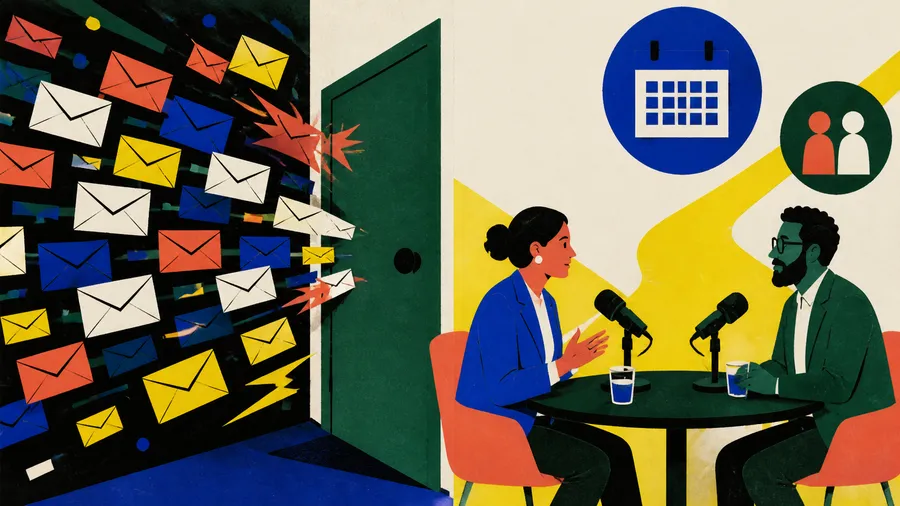
Cold email and a B2B podcast solve different parts of customer acquisition. Email can introduce a relevant offer and invite a direct sales conversation. A podcast gives the host and guest a reason to discuss their work in depth, while creating content for a wider audience.
The right choice depends on your offer, the people you need to reach and your team’s capacity. Vivin supports both approaches. We choose the campaign channels around the agreed outcome, rather than asking clients to manage the channel mix.
Compare the work and the result
| Decision | Direct email outreach | Podcast-led growth |
|---|---|---|
| First invitation | Discuss a relevant business need or offer | Join an editorial conversation |
| Host requirement | A sales team can take the next call | A founder or expert needs recording time |
| Output | Replies, qualified inquiries and sales conversations | Recorded interviews, relationships and reusable content |
| Ongoing work | Qualification, follow-up and sales handoff | Guest coordination, production, publishing and relationship follow-up |
| What to measure | Qualified inquiries, bookings and attributed sales | Relevant guest conversations, content use and subsequent commercial interest |
When direct outreach fits
Use a direct offer when the buyer problem is clear, the service is established and your team can respond to interest. A useful email explains why the offer is relevant and gives the recipient a straightforward next step.
List quality, message relevance, deliverability and responsible follow-up all matter. Increasing send volume does not fix an unclear offer. Replies also need qualification: an objection, a referral and a meeting request need different handling.
If your team wants to handle its own follow-up, review pay-per-lead. If the gap is getting qualified conversations onto a calendar, review pay-per-appointment. For suitable B2B offers, pay-per-close and revenue share connects the program to attributed contracts, with infrastructure and success-fee terms agreed before launch.
When a podcast fits
A podcast earns its place when the conversations and content are both useful. It can help a specialist business learn from buyers, develop thought leadership, build referral relationships and maintain a visible presence across channels.
Choose guests for their perspective and relevance to the show’s audience. Prepare questions that make the recording worthwhile. After publication, share useful assets and continue the relationship in a way that fits the guest’s interests.
The host still needs to prepare, record and approve the work. The managed podcast service covers the agreed guest, production, content and social-management responsibilities around that time.
Can the approaches work together?
Yes. A business can use a show to develop useful insights and content, then use that material in relevant sales conversations. A direct campaign can also reach buyers who want to discuss the offer but do not want to appear on a show.
Keep the purpose of each invitation clear. An interview should be worthwhile as an interview. When a guest expresses commercial interest, record that separately and agree a suitable next step.
Choose a first campaign
Start with three questions: who needs the offer, what should happen next, and who on your team will handle that next step? Use the lead and appointment quality scorecard for a performance campaign or the podcast-led growth planner for a show.
Book a strategy call to compare the scope around your market.